REVIEW · CITY TOURS
From Negombo: City Tour & Fishing Village Tour by Tuk-Tuk
Book on GetYourGuide →Operated by Sign of Lanka (Pvt) Ltd · Bookable on GetYourGuide
Negombo moves fast, and this short tuk-tuk route keeps up. I like how the tour stitches together religious landmarks and coastal fishing life without turning it into a long haul. You get a clear sense of how this city works, from the morning catch to colonial-era stonework.
Two standouts for me are the Lellama market stop, with the rhythm of fishermen landing the day’s supply, and the final visit to Angurukaramulla Temple, known for its dragon’s mouth entrance and a mossy ruin of an ancient library. One thing to consider: if you’re sensitive to crowds or smells, the fish market area can be intense, especially early in the day.
In This Review
- Key Things You’ll Really Notice
- Negombo by Tuk-Tuk: The 4-Hour Format That Makes Sense
- Hotel Pickup Options: Easy Starts from Waikkal to Katunayake
- Lellama Seafood Market: The Morning Catch You Can Watch Up Close
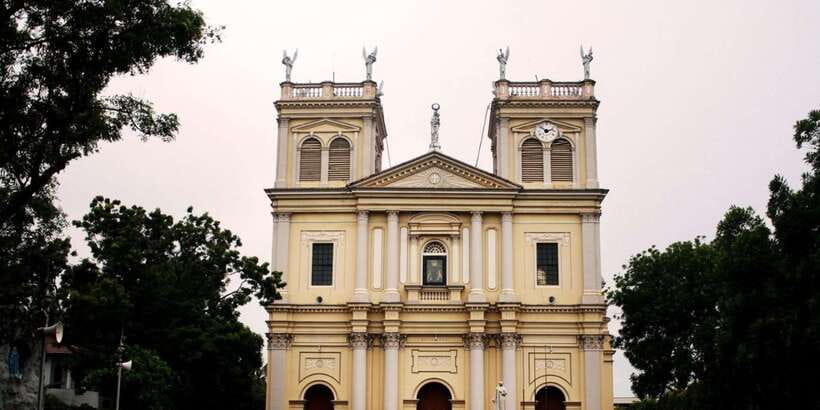
- St. Mary’s Church: Portuguese-Era Roots and 19th–20th Century Construction
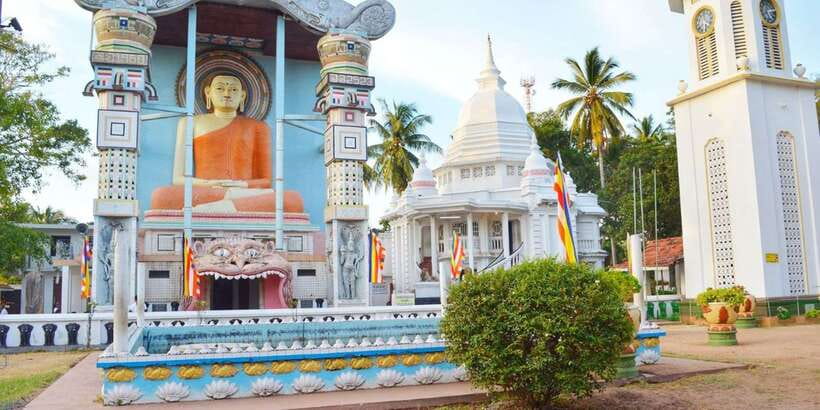
- Sri Singama Kali Amman Kovil: Murals, Sculptures, and Temple Detail
- Hamilton Canal: A British-Made Waterway with Real Trade Lines
- Negombo Dutch Fort: Portuguese Origins, Dutch Rebuilding, and a Pentagonal Shape
- Angurukaramulla Temple: The Dragon’s Mouth Entrance and Moss-Covered Library Ruin
- Price and Value: What $40 Gets You (and When It Feels Worth It)
- Timing, Breaks, and Photo Stops: How to Get the Most Out of the Morning
- Guide Quality and Group Setup: Why It Changes the Experience
- Who This Tour Fits Best (and Who Might Want to Skip It)
- Should You Book This Negombo City Tour by Tuk-Tuk?
- FAQ
- How long is the Negombo City Tour & Fishing Village Tour?
- What is the pickup time and where do pickups happen?
- What locations are included in the tour?
- Is there an English guide?
- Are entrance fees included?
- Does the price include transportation by tuk-tuk?
- What should I bring with me?
- Is cancellation available, and can I pay later?
Key Things You’ll Really Notice
- Lellama seafood market timing: you’re there for the catamarans and active catch arrivals.
- Faith + art in the same morning: St. Mary’s Church and Sri Singama Kali Amman Kovil are both worth your time.
- Colonial leftovers you can see: Hamilton Canal and the Dutch Fort connect to the era that shaped Negombo.
- Angurukaramulla’s dragon’s mouth: plus a 300-year-old moss-covered library ruin inside the temple grounds.
- A small-group feel with real local handling: private group setup, with guides known for being punctual and good with photos.
Negombo by Tuk-Tuk: The 4-Hour Format That Makes Sense
This is one of those tours that fits a realistic travel day. You start with a hotel pickup around 08:00 and you’re out and moving before the sun gets too heavy. With a total duration of about 4 hours, you’re not stuck in transit for half the morning. You also get built-in pauses for photo stops and breaks, which matters in Sri Lanka where heat and timing both play a role.
The tuk-tuk format is practical here. Negombo’s key sights aren’t all clustered in one neat square, and going by road makes short hops easier. The tour also keeps you from having to juggle tickets, directions, and parking. Entrance fees are included, and the price covers the driver, fuel surcharge, parking fees, and government taxes—so you can focus on the places, not the fine print.
One more smart part: it’s an English live guide experience in a private group format. Even when your group is small, having one person route you and explain what you’re looking at changes the day from sightseeing to understanding.
You can also read our reviews of more city tours in Negombo
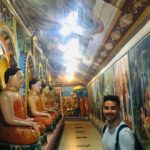

Hotel Pickup Options: Easy Starts from Waikkal to Katunayake
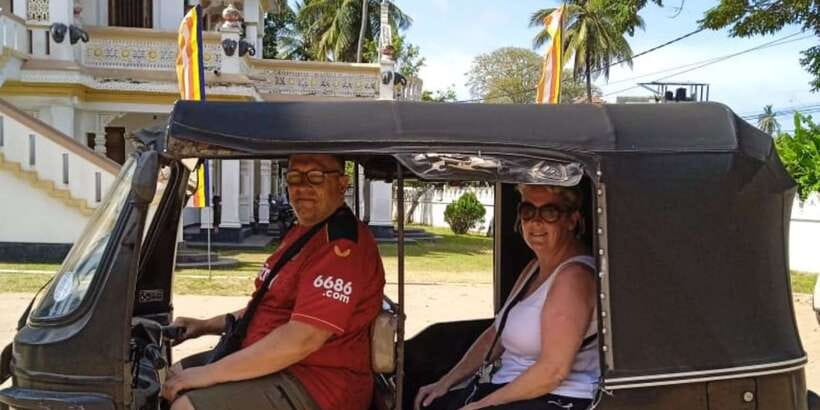
If you’re staying in the Negombo area, pickup is set up to reduce hassle. You can be picked up from Waikkal, Kammala, Negombo, Wattala, or Katunayake, and you’ll be dropped back at one of Waikkal, Negombo, Wattala, Katunayake, or Kammala.
That flexibility matters because Negombo can feel split between beach zones and inland neighborhoods. You don’t want to lose time negotiating transport at the start of your morning. This tour is built to remove that friction.
Lellama Seafood Market: The Morning Catch You Can Watch Up Close
The tour kicks into its most local gear at Lellama seafood market. Around 08:30, you’re positioned near the area associated with the catamarans and active seafood arrivals. The point isn’t just photos—it’s seeing the pace of a coastal city that still runs on fishing.
What I like about this stop is that it gives you a sense of work and routine. You’ll see the way fishermen bring in the day’s catch and how the market atmosphere forms around that flow. If you’ve only seen Sri Lanka from viewpoints or temples, this is the grounding piece that makes everything else feel more connected.
Practical consideration: markets have smells and close quarters. If that’s a deal-breaker for you, keep expectations realistic. Also, religious holidays can affect operations. One guide experience noted that during Good Friday, the fish market was closed, and the guide adjusted with other sites to compensate. The lesson: plan to stay flexible, and trust the guide to manage the timing.
St. Mary’s Church: Portuguese-Era Roots and 19th–20th Century Construction
Next up is St. Mary’s Church, a major stop for anyone interested in how Negombo’s identity connects to Portuguese influence. The church reflects a Christian heritage linked to Portuguese colonial presence, and the construction timeline is a clue to how long communities took to build and rebuild.
The tour highlights that construction resumed in 1874 and was completed in 1922. That’s not just trivia—it helps you look at the building as a living project shaped by generations, not a single-era monument. Even if you don’t read architectural details like a specialist, knowing the construction timeline makes the place feel more human.
What to do here: take your time at the church exterior and interior areas you’re allowed to see. This is one of the stops where you’ll get more out of standing still for a minute than rushing for one quick shot.
Sri Singama Kali Amman Kovil: Murals, Sculptures, and Temple Detail
After the church, the tour moves into Hindu temple space at Sri Singama Kali Amman Kovil. This is where the day turns from colonial-era influence into local religious art and iconography.
The key draw is that the temple is known for remarkable murals and sculptures. In practice, that means you’ll want to slow down enough to look up and around. Murals and sculpted figures are easy to miss if you’re moving too quickly between sites, so ask your guide to point out specific elements if they can.
Also, temples are where you learn how people treat sacred spaces in daily life. Watch how visitors enter and behave. Keep your pace respectful, and remember that you’re stepping into a community space, not a museum set.
You can also read our reviews of more tours and experiences in Negombo

Hamilton Canal: A British-Made Waterway with Real Trade Lines

At about 09:45, you’ll get to Hamilton Canal, described as a 14.5 km waterway connecting Puttalam with Colombo. The tour’s framing is historical: it was built by the British in 1802, and it supported transport and trade.
This stop works well because it’s not just a scenic pause. It connects the dots between inland commerce and coastal cities. If you’ve ever wondered why certain ports and canal systems mattered, this is the short explanation you’ll appreciate.
What to expect on arrival depends on how you’re positioned, but you’ll have time to take in the canal and get the guide’s context. If you like transport history—how water routes shaped economies—this is one of the more thought-provoking stops.
Negombo Dutch Fort: Portuguese Origins, Dutch Rebuilding, and a Pentagonal Shape
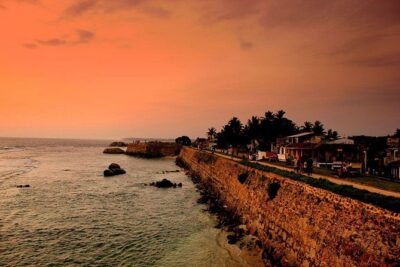
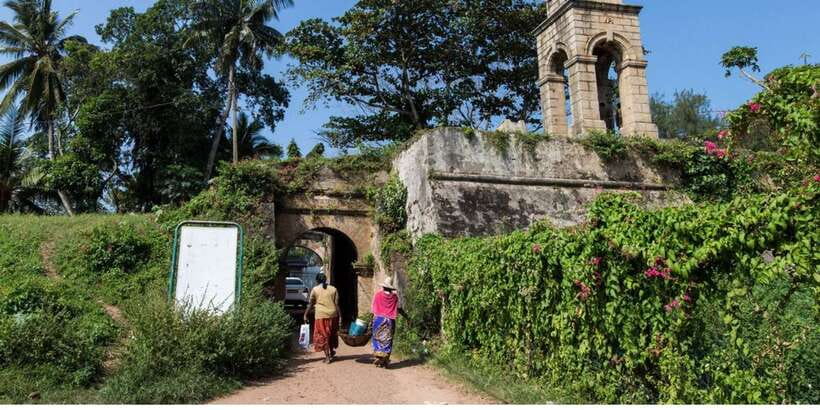
Around 10:00, you’ll visit the Negombo Dutch Fort. The tour shares a layered origin story: it was originally constructed by the Portuguese, then later rebuilt by the Dutch in the 1640s. The fort is noted for its pentagonal shape, which is a detail you can look for if you’re paying attention to layout rather than just walls.
Why this matters: it turns what could be a generic fort stop into a timeline. You’re looking at evidence of changing control and engineering preferences. The pentagonal shape isn’t just design—it’s tied to how forts were planned for defense.
One practical tip: forts can mean sun and open edges. Wear something breathable, and don’t plan to stand in direct light for too long if the weather is hot.
Angurukaramulla Temple: The Dragon’s Mouth Entrance and Moss-Covered Library Ruin

The final major stop is Angurukaramulla Temple at about 10:30. This is the most visually memorable part of the route. The tour describes a dragon’s mouth entrance, which is believed to ward off evil spirits, and it’s the kind of entrance that turns walking in into a moment.
Inside the temple premises, you’ll find a 300-year-old moss-covered ruin of an ancient library. That combination—mythic entrance plus age-worn stone—makes the temple feel layered. You’re not just ticking off a site; you’re seeing how belief and history share the same physical space.
The walk through the entrance is also a nice change of pace from forts and canals. If you enjoy photography, this is where you can get your best angles, but keep it respectful. If there’s a flow of devotees, let them move first and then position yourself for photos.
Price and Value: What $40 Gets You (and When It Feels Worth It)
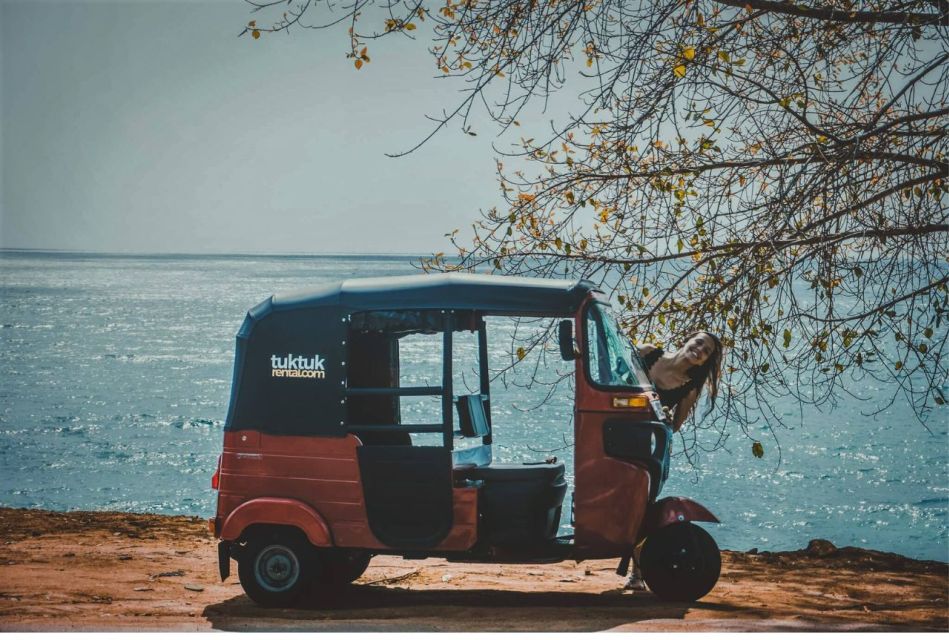
At $40 per person for 4 hours, this tour is priced like a “do it right the first time” option. You’re not only paying for tuk-tuk transport; you’re also paying for entrance fees, driver charges, fuel surcharge, parking fees, complimentary refreshments and water, and government taxes.
That’s the real value here: you’re buying a clean package where costs aren’t constantly popping up during the day. With a tuk-tuk city route, that can easily turn into a hassle if you try to assemble everything yourself.
Is it always the best deal for everyone? If you already know Negombo well and you’re comfortable arranging transport plus tickets, you might spend less on paper. But if you want someone to handle routing, explain the significance of each stop, and keep you moving in a way that fits a short morning, $40 starts to feel fair quickly.
Timing, Breaks, and Photo Stops: How to Get the Most Out of the Morning
The schedule runs in a tight sequence, but it’s not a forced march. You’ll have break time blocks and photo stop windows between major sites. That’s important because you don’t want to arrive at Angurukaramulla and feel like you’re late and sweaty with no energy left to look around.
If you want great photos, charge your phone before pickup. The tour specifically suggests bringing a charged smartphone, and it’s also a reminder to think about your battery because you’ll be out during morning activity.
Also, bring passport or ID card—a copy is accepted. You don’t want to discover at the door that you forgot the one thing that proves who you are.
Guide Quality and Group Setup: Why It Changes the Experience
One of the strongest parts of this experience is the way the guides are described. In one case, the guide was praised for being punctual, good at photography, and skilled at explaining Negombo and Sri Lankan culture. Another guide, named Samantha, was described as brilliant and made sure the tour still worked on a holiday like Good Friday when the fish market was closed. Another driver lineup included Fernando and Simon, with the group split across multiple tuk-tuks (eight people across four tuk-tuks).
The practical takeaway for you: this tour feels good when your guide is comfortable managing timing and adjusting if a site is closed. You’re paying for that coordination, not just transport.
Who This Tour Fits Best (and Who Might Want to Skip It)
This tour is a strong match if you:
- Want a short, guided Negombo overview without planning every stop.
- Like seeing how religion, colonial-era structure, and coastal work connect in one morning.
- Prefer a private-group setup where the schedule is paced for your group.
You might reconsider if you:
- Want a slow, unstructured day with lots of wandering. This is time-managed.
- Are very sensitive to market conditions, since the fish market is part of the core experience.
Should You Book This Negombo City Tour by Tuk-Tuk?
If you’re in Negombo with limited time, this is a smart book. I’d especially consider it if your goal is to understand the city quickly: fishing life at Lellama, Portuguese-to-Dutch traces at the Dutch Fort, British-era infrastructure via Hamilton Canal, and a memorable temple finish at Angurukaramulla with the dragon’s mouth and the mossy library ruin.
It’s also a solid pick for first-time visitors because the included entrance fees, parking, and water/refreshments remove the usual little travel stressors. And if conditions change—like market closures around holidays—you’ll have a guide who can adapt the morning rather than leaving you stranded with a half-day.
If you already know exactly what you want to see and you’re confident handling transport yourself, it might not be necessary. But for most people, this hits the main ideas of Negombo in one focused 4-hour loop.
FAQ
How long is the Negombo City Tour & Fishing Village Tour?
The tour lasts about 4 hours.
What is the pickup time and where do pickups happen?
Pickup starts around 08:00, and pickup is available from hotels in Waikkal, Kammala, Negombo, Wattala, and Katunayake.
What locations are included in the tour?
Stops include Lellama seafood market, St. Mary’s Church, Sri Singama Kali Amman Kovil, Hamilton Canal, Negombo Dutch Fort, and Angurukaramulla Temple.
Is there an English guide?
Yes, the tour includes an English live tour guide.
Are entrance fees included?
Yes, entrance fees for the sightseeing places mentioned in the program are included.
Does the price include transportation by tuk-tuk?
Yes. Transportation from your hotel and back is included, using a tuk-tuk.
What should I bring with me?
Bring a charged smartphone and passport or an ID card (a copy is accepted).
Is cancellation available, and can I pay later?
There is free cancellation up to 24 hours in advance for a full refund, and you can reserve now and pay later.