REVIEW · COLOMBO TUK-TUK CITY TOURS
Explore Colombo by Tuk Tuk – All Entry Fees Included
Book on Viator →Operated by Travel with Lenin · Bookable on Viator
Colombo by tuk-tuk turns traffic into sightseeing. I love the private, hotel-pickup setup that keeps the day easy, and I love that entrance fees are included so temple visits and monuments don’t turn into a pay-more scavenger hunt. One thing to plan for: the ride can feel a little fast, and at least a couple of runs seemed shorter than the full 4.5 hours.
This is a smart half-day format for Colombo, with morning or afternoon departures and a route that mixes religious landmarks, colonial-era architecture, and the real pulse of the city around Pettah. You’ll also have bottled water and snacks along the way, which matters when you’re bouncing around by tuk-tuk and the sun gets playful.
In This Review
- Key things I’d zero in on before you go
- Why a private tuk-tuk works so well in Colombo
- Price and value: $33 that covers the parts people hate paying for
- Morning vs afternoon: how to pick the best departure window
- Stop-by-stop: the Colombo highlights you’ll actually see
- 1) Gangaramaya Buddhist Temple: history you can feel in the carvings
- 2) Sri Ponnambalam Vanesar Kovil: a British-era temple with an independence story
- 3) Independence Memorial Hall: the moment of national shift
- 4) Viharamahadevi Park area: colonial Town Hall frontage and green space
- Pettah Market: the part of Colombo that feels most like Colombo
- Pettah itself: open-air bazaars and street energy
- Red Mosque (Jami Ul-Alfar Masjid): the color stop you’ll remember
- The redeveloped floating market area: a modern twist in a central pocket
- Old Town Hall (hidden behind hawker stalls): history you have to look for
- Ceylon Tea Supermarket: a practical cultural stop
- Fort-area checkpoints: markets, gate history, and colonial government traces
- Manning Market: wholesale fruit and veg (bananas are part of the story)
- Kayman’s Gate: a Fort entrance with a bell tower survivor
- President’s House: view-and-context, not a long lingering visit
- Colombo Lighthouse, Fort Railway Station, and Wolvendaal Church: ending with movement
- Colombo Lighthouse: portside views with a free stop
- Colombo Fort Railway Station: the big rail gateway
- Wolvendaal Church (Christian Reformed Church of Sri Lanka): Dutch colonial architecture still used
- What I recommend bringing (so the half-day stays fun)
- Who should book this tuk-tuk loop?
- Should you book Explore Colombo by Tuk Tuk?
- FAQ
- How long is the Explore Colombo by Tuk Tuk tour?
- Does the tour include hotel pickup in Colombo?
- Are entrance fees included?
- Is this a private tour?
- What stops are included during the tour?
- Is the tour good for first-time visitors?
- Are alcoholic beverages included?
- What happens if weather is poor?
Key things I’d zero in on before you go
- Hotel pickup + private tuk-tuk: you’re not waiting around with a bus crowd.
- All entrance fees included: you can focus on the sights instead of budgeting at each stop.
- Pettah market time: ideal for seeing street life without trying to self-navigate in a hurry.
- Fort rail-station and lighthouse finale: quick looks that connect Colombo’s past and portside present.
- Short, efficient stop lengths: lots of highlights, less time sitting.
- Food-and-market moments: one guide started with coconut juice, and the produce stop is a standout.
Why a private tuk-tuk works so well in Colombo
Colombo can feel like it has layers: colonial buildings in one breath, market chaos in the next, then calm pockets by the waterfront. A private tuk-tuk is a strong match for that rhythm. The vehicle is small enough to make turns you wouldn’t think possible, and it gets you close to where you want to be without losing half the time to parking.
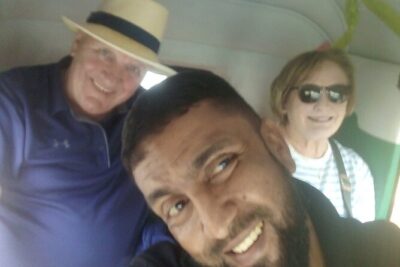
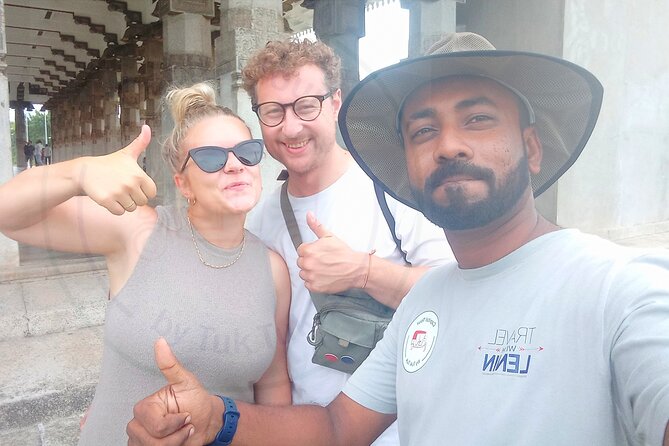
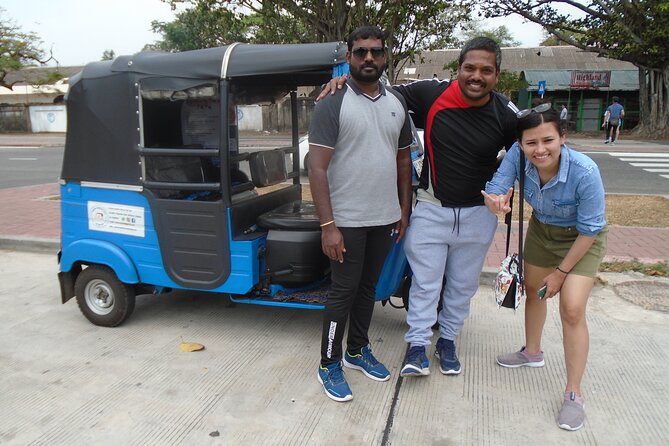
The private part is what really changes the experience. You can move at the driver’s pace, you can ask quick questions as you ride, and you’re not stuck listening to ten different people negotiate the itinerary. In the best examples I saw, the guides brought real warmth. One driver named Kavithan was described as friendly and helpful, starting with welcome coconut juice and then guiding the day through major sights.
That said, this kind of tour works best when you’re okay with “taste not marathon.” Most stops are around 10 to 20 minutes, with a longer stretch at Pettah. If you want unhurried, museum-style time in every place, you might feel a bit rushed.
You can also read our reviews of more tours and experiences in Colombo.


Price and value: $33 that covers the parts people hate paying for
At $33 per person for about 4 hours 30 minutes, the price is fair because it includes the stuff that usually chips away at your budget. You get private transportation, bottled water, snacks, and all fees and taxes. That last line matters. When entrance fees are handled upfront, you can keep the day moving and you don’t have to stop to figure out ticket costs on the spot.
Also, the tour is built around “entry-and-see” locations: temples, monuments, and a handful of historic buildings. When you’re going to those places anyway, having the tickets included turns the trip into one simple payment instead of a series of quick cash moments.
One small tradeoff: alcoholic beverages aren’t included. If you like pairing sights with a drink, plan to buy separately elsewhere.
Morning vs afternoon: how to pick the best departure window
You can choose morning or afternoon departures, which is useful in Colombo because the city’s mood changes with the light and heat. In general, mornings tend to feel easier for walking through markets and temple areas. Afternoons can be great too, especially if you want the softer light for the colonial buildings and Fort-area views.
The practical angle is this: because the tour is short, you’re not trying to “cover everything.” You’re trying to hit key Colombo highlights in a single loop. If you pick a time that matches your energy level, the schedule will feel smooth rather than tight.
Tip: if you’re sensitive to heat, consider a morning start and plan for sun exposure during the longer market stretch in Pettah.
Stop-by-stop: the Colombo highlights you’ll actually see
This route is designed like a loop: religious landmarks, independence-era commemoration, then into the market lanes around Pettah, and finally toward Fort, rail, and the waterfront.
1) Gangaramaya Buddhist Temple: history you can feel in the carvings
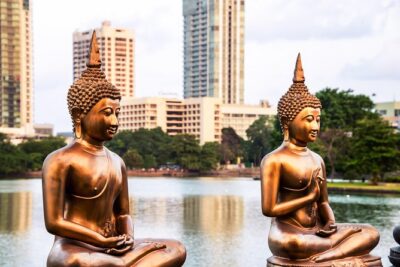
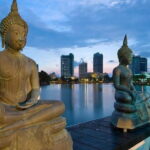
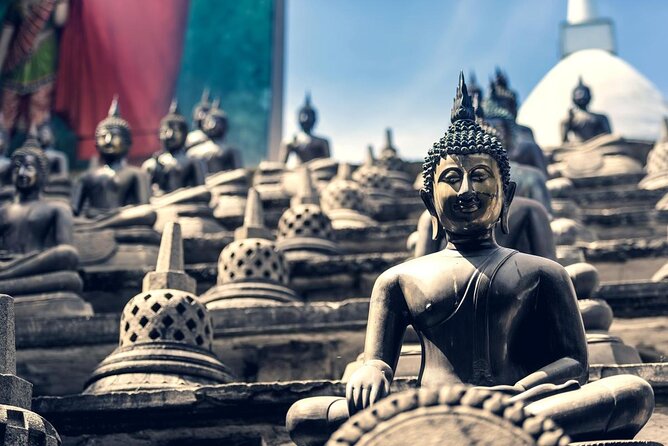
You’ll start at Gangaramaya Temple, one of Colombo’s older Buddhist temples. It was started in the late 19th century by scholar monk Hikkaduwe Sri Sumangala Nayaka Thera. The short visit is enough to understand why this place matters: it’s not just a stop on a checklist. It’s a lived religious site with atmosphere.
What I like about starting here on a half-day tour is simple: you get culture and context immediately, before the day gets loud around markets. You also get a clean reference point for later colonial and independence-era sights.
Consideration: dress and behavior expectations for temples are usually strict enough that you’ll want to be respectful. If you’re in shorts and a bare-shoulder top, you might feel uncomfortable. Bring something you can adjust with.

2) Sri Ponnambalam Vanesar Kovil: a British-era temple with an independence story
Next is Sri Ponnambalam Vanesar Kovil (linked in the description to Sri Ponnalawaneswaram / Ponnambalawaneswaram Temple). This temple was built during British rule by Ponnambalam Mudaliyar, who was killed while fighting for Sri Lanka’s independence.
This stop adds a layer to Colombo that’s easy to miss when you only focus on modern neighborhoods: religion plus political memory. Even with a 20-minute stop, you’ll likely leave with the sense that places of worship here aren’t separated from national storylines.
3) Independence Memorial Hall: the moment of national shift
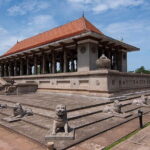
Then comes Independence Memorial Hall, described as a national monument built to commemorate Sri Lanka’s independence from British rule, tied to restoring full governing responsibility to Ceylonese leadership.
A 10-minute stop means you won’t be reading every inscription like a history class. But it’s a strong way to frame the day. When you later look at Fort-era buildings and old administrative structures, you’re seeing the city as a timeline rather than random landmarks.
4) Viharamahadevi Park area: colonial Town Hall frontage and green space
You’ll also pass through the Viharamahadevi Park area in Cinnamon Gardens, in front of the colonial-era Town Hall. The park is described as the oldest and largest public park in Colombo and as something built by the British colonial administration.
Even if you don’t spend long here, the location matters. It’s the kind of landmark you remember because it connects the colonial footprint with everyday public life.
Pettah Market: the part of Colombo that feels most like Colombo
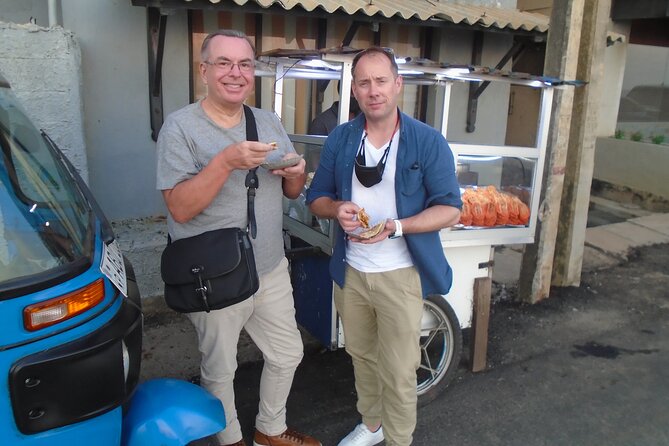
This is the stretch most people are happy they didn’t skip.
Pettah itself: open-air bazaars and street energy
The tour includes about 1 hour in Pettah, located east of the city center Fort. Pettah is known for the Pettah Market, an open-air collection of bazaars and markets. It’s one of Colombo’s most active commercial areas, so it tends to give you that “you’re in the middle of things” feeling without requiring you to figure it all out alone.
In a half-day tour, a market stop is where you learn the most quickly. You see what people actually buy, what the storefront rhythms are like, and how neighborhoods connect to commerce.
Red Mosque (Jami Ul-Alfar Masjid): the color stop you’ll remember
While you’re in the Pettah area, you’ll also get to see the Red Mosque, formally Jami Ul-Alfar Masjid, built in the early 20th century. The description highlights the bold red-and-white look and how much it stands out visually.
This is a good counterpoint to the temple stops earlier. You get two major religious architectures in one day, and the contrast helps your brain sort out what you’re seeing.
The redeveloped floating market area: a modern twist in a central pocket
The tour also mentions a former industrial area redeveloped around the year 2000 into a floating market with almost 100 vendors. Even if you only get quick views during your Pettah block, it’s a reminder that Colombo doesn’t freeze in the past. It repurposes space and keeps moving.
Old Town Hall (hidden behind hawker stalls): history you have to look for
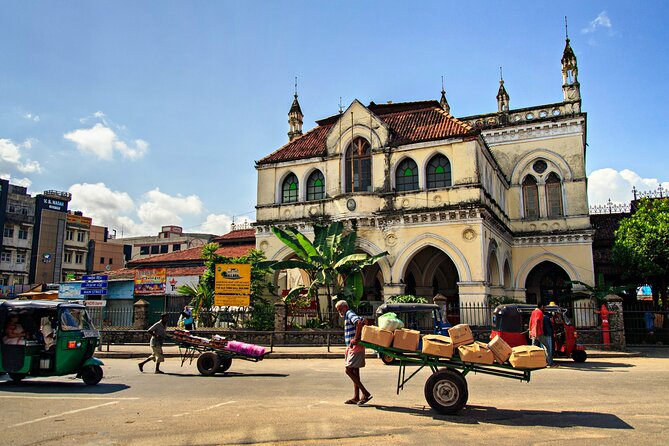
In Pettah’s market area, you’ll visit the Old Town Hall building, built in 1873, by British architect J. G. Smither. The key detail is that it’s hidden by hawker stalls, which is exactly why a guided stop is helpful. If you were on your own, you might walk right past it without realizing.
This is where the “included ticket and short stop” style can actually help. You’re not hunting for it. You get shown where it is, and you get context quickly.
Ceylon Tea Supermarket: a practical cultural stop
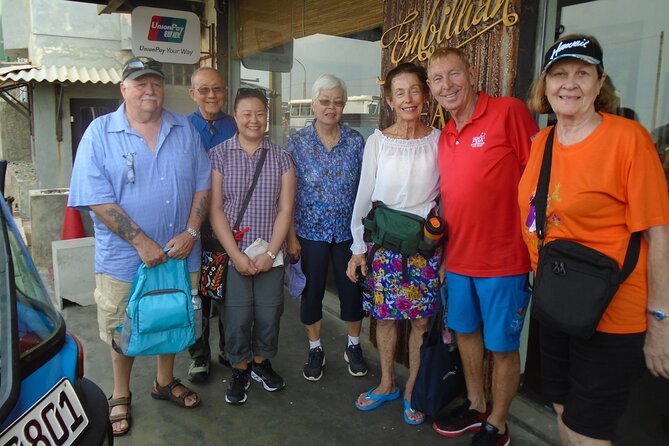
You’ll spend about 20 minutes at Ceylon Tea Supermarket. The stop is listed as admission free, which is nice because it keeps the tour moving without adding extra costs.
The stop is tied to the idea of Ceylon tea as a Sri Lankan identity marker, with the description noting that Ceylon tea has been described as both a geographical indication and a pillar of Sri Lankan culture and heritage.
Even if you don’t buy anything, this can be a useful breather. You’ll often find it’s the kind of place where you can ask questions about tea varieties, packaging, or how tea is presented in-country. If you do want a small souvenir, it’s an easy, contained option.
Fort-area checkpoints: markets, gate history, and colonial government traces
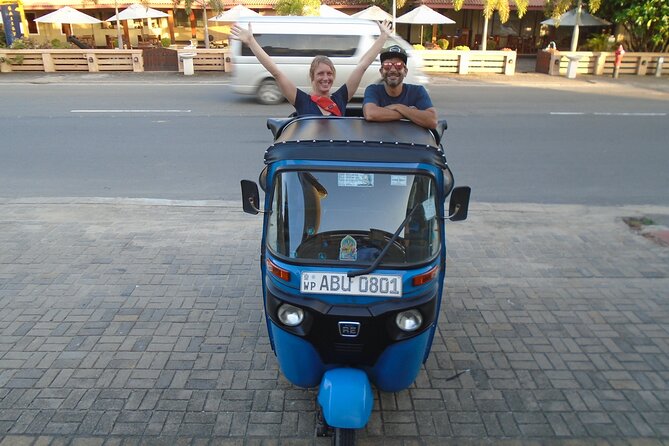
After Pettah, the route shifts toward the Fort district.
Manning Market: wholesale fruit and veg (bananas are part of the story)
Just east of Fort train station sits Manning Market, a wholesale fruit and veg center. The description points out it’s a place where bananas take center stage, with the overall vibe described as a monkey’s dream of bananas.
This is one of the most praised elements. The local vegetables and fruits market stop is highlighted as the best visit in at least one of the top reviews, which makes sense. Market moments are often the most memorable because they’re sensory and immediate.
If you want a Colombo snapshot that feels real, not staged, this is it.
Kayman’s Gate: a Fort entrance with a bell tower survivor
Next is Kayman’s Gate, described as an entrance to the former Colombo Fort. A free-standing bell tower still stands at the site now.
This kind of stop is quick, but it helps you understand Colombo’s geography as something walled and structured in the past. You’re not just looking at buildings. You’re seeing how the city was organized.
President’s House: view-and-context, not a long lingering visit
The tour includes President’s House, the official residence and workplace of the President of Sri Lanka on Janadhipathi Mawatha. The description notes that since 1804 it served as the residence of British governors and other governing figures before becoming the current presidential seat.
Because no long visit duration is provided here, treat it as a contextual stop. It’s still valuable. You see the scale of the administrative footprint and you connect it back to independence and colonial history.
Colombo Lighthouse, Fort Railway Station, and Wolvendaal Church: ending with movement
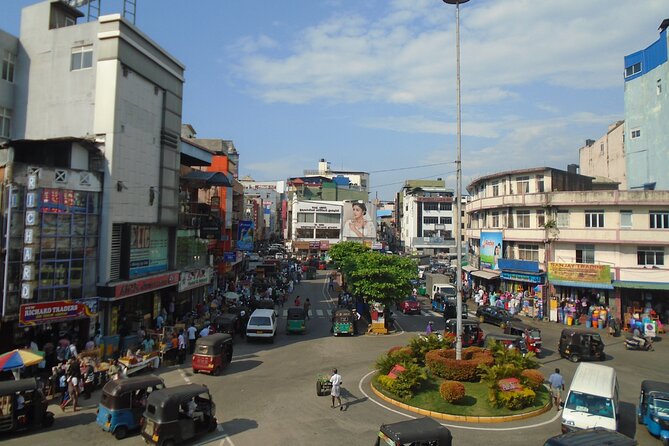
The final stretch feels like Colombo turning from administrative history into motion—port, rails, and living places of worship.
Colombo Lighthouse: portside views with a free stop
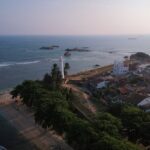
Colombo Lighthouse is listed as free admission and a short 5-minute stop. It’s operated and maintained by the Sri Lanka Ports Authority and sits at Galbokka Point south of the Port of Colombo, on the waterfront.
Even with just a moment, the lighthouse works because it anchors you to the idea that Colombo is a port city. The breeze and the location can make the earlier market noise feel like it’s part of the same whole.
Colombo Fort Railway Station: the big rail gateway
Then you’ll visit Colombo Fort Railway Station, a major hub served by Sri Lanka Railways with many inter-city and commuter trains arriving daily. It’s described as the main rail gateway to the central parts of the city.
This is the kind of stop that’s easy to overlook if you’re not planning for it. Here, you get it without needing to know what train lines to watch.
Wolvendaal Church (Christian Reformed Church of Sri Lanka): Dutch colonial architecture still used
The tour includes Christian Reformed Church of Sri Lanka, specifically Wolvendaal Church, described as a Dutch colonial-era building in Pettah. It’s one of the oldest Protestant churches still in use in the country.
A 15-minute visit can feel short, but the value is the contrast. You’ve already seen Buddhist temple spaces and a major mosque earlier. Ending with a historic church that’s still active makes Colombo’s religious map feel complete.
What I recommend bringing (so the half-day stays fun)
Even though this tour includes water, snacks, and entry fees, you’ll still want to be comfortable for the movement between stops.
- Light layer for temples and church interiors, if places feel cool or require covered shoulders
- A hat and sunscreen for market time in Pettah
- Comfortable walking shoes, since market lanes can be uneven
- A small amount of cash or card for snacks beyond what’s included and for souvenirs (since the included items don’t cover everything you might want)
Who should book this tuk-tuk loop?
This tour is a great fit if you:
- Want the highlights of Colombo in a single half-day without planning a route yourself
- Like markets and local street shopping enough to spend real time there
- Prefer a private format where your day doesn’t depend on a group consensus
- Want entrance fees handled upfront so you can keep moving
It might feel less ideal if you:
- Need slow, long visits at each stop
- Hate rushing through religious sites
- Are the type who needs deep museum reading time rather than quick orientation
Should you book Explore Colombo by Tuk Tuk?
Yes, I’d book it for most first-timers in Colombo—especially if you care about seeing both the grand landmarks and the everyday commercial neighborhoods in one go. The price feels sensible because entrance fees, transportation, water, and snacks are included, and the route is designed to connect Colombo’s religious sites, independence-era sights, and Fort-to-port energy.
I’d just go in with the right expectations: it’s a highlight tour, not an all-day deep study. If you want a calmer pace, consider choosing your departure time carefully and plan to treat each stop as a short visit with photo-friendly orientation.
If you’re coming to Colombo on a tight schedule, this private tuk-tuk loop is one of the better ways to get oriented fast.
FAQ
How long is the Explore Colombo by Tuk Tuk tour?
The tour is approximately 4 hours 30 minutes.
Does the tour include hotel pickup in Colombo?
Yes, pickup in Colombo is offered.
Are entrance fees included?
Yes. The tour includes all entrance fees, bottled water, snacks, and all fees and taxes.
Is this a private tour?
Yes. It is a private tour/activity, and only your group participates.
What stops are included during the tour?
The route includes Gangaramaya Temple, Sri Ponnambalam Vanesar Kovil, Independence Memorial Hall, Pettah (including time around Pettah Market), Ceylon Tea Supermarket, Old Town Hall, Manning Market, Kayman’s Gate, Colombo Lighthouse, Colombo Fort Railway Station, and Wolvendaal Church.
Is the tour good for first-time visitors?
It can be a good choice for most travelers because it covers major Colombo highlights in a single half-day with a set route.
Are alcoholic beverages included?
No, alcoholic beverages are not included.
What happens if weather is poor?
The experience requires good weather. If it is canceled due to poor weather, you’ll be offered a different date or a full refund.