REVIEW · CRUISES & BOAT TOURS
Negombo: Hamilton Canal to Colombo by Boat via Muthurajawela
Book on GetYourGuide →Operated by Beyond Escapes · Bookable on GetYourGuide
A Dutch canal boat ride beats the usual beach routine. You get calm lagoon water, mangrove swamps, and a chance to spot birds like cormorants and herons with an English nature guide. One thing to consider: the pace is fairly quick for a short tour, so it can feel different than the longer day you might expect on some listings.
I especially like how the route connects Dutch-era waterways to today’s working wetlands, where people fish and farm right alongside the birdlife. I also like the private boat setup with life jackets and light refreshments, which keeps the experience relaxed rather than rushed. The main drawback is cost: it’s $80 per person, and it can feel steep if you’re comparing to a simpler, self-arranged tuk-tuk + boat option.
In This Review
- Key points before you go
- Dutch Canal to Negombo Lagoon: a colonial waterway with working farmland nearby
- Negombo Lagoon cruising: mangroves, fishing villages, and birds on patrol
- Muthurajawela Wetland Sanctuary Visitor Center: where the story gets real
- The itinerary flow: 2.5 hours that stays structured, not chaotic
- Bird spotting like a pro: what to watch for from the boat
- Price and value: what $80 buys you in Negombo
- Who this boat tour suits (and who should skip it)
- Guide quality makes or breaks it: why the English commentary matters
- Quick planning tips so the trip feels easy
- Should you book the Negombo boat via Muthurajawela?
- FAQ
- Where do they pick me up and drop me off?
- How long is the boat trip?
- Is there an English-speaking guide?
- What’s included in the price?
- Is it a private group?
- What should I bring?
- Can children join?
- Is it suitable for mobility impairments, pregnancy, or back problems?
- Is free cancellation available?
Key points before you go
- Dutch Canal first, then lagoon: You start with the colonial-era waterway before moving into the wider wetland system.
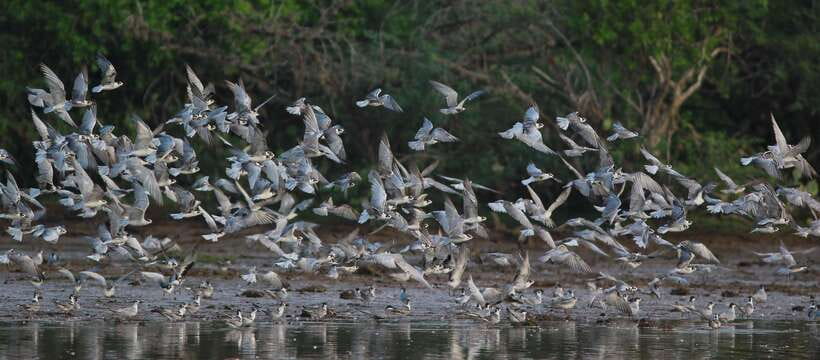
- Mangroves = wildlife time: Dense mangrove swamps are the core attraction, and birdlife is the payoff.
- Two nature zones, one wetland center: You’ll move from canal/lagoon cruising to the Muthurajawela Wetland Sanctuary Visitor Center area.
- English-speaking nature guide: You’ll get context for what you’re seeing, not just a drive-by.
- Photo stops along the way: You’ll have short breaks for photos rather than only moving continuously.
Dutch Canal to Negombo Lagoon: a colonial waterway with working farmland nearby
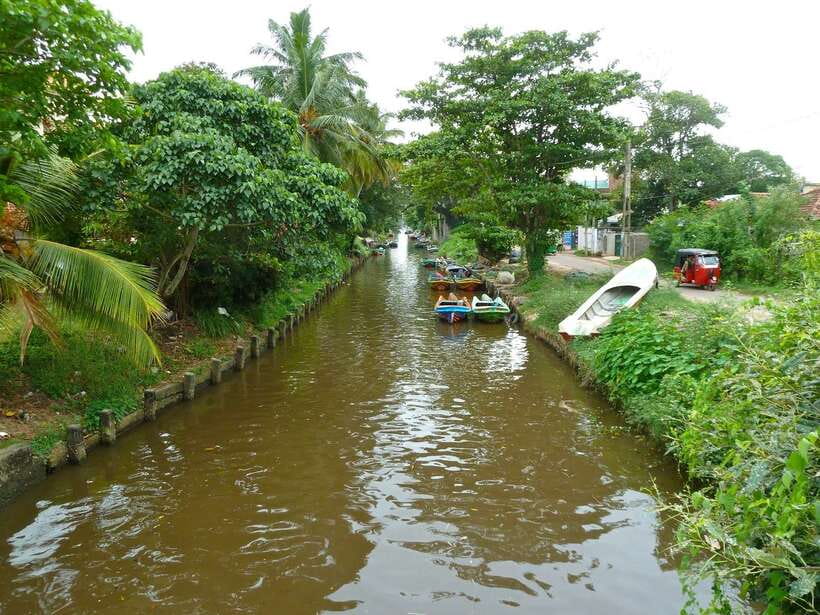
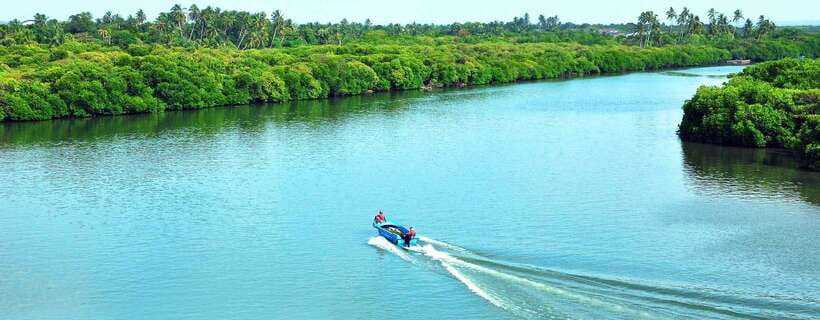
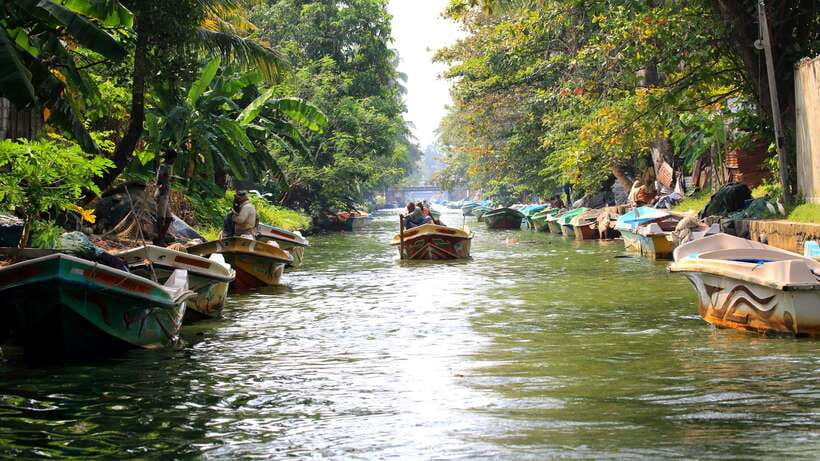
This trip begins on the Dutch Canal, a historic channel that once mattered for moving supplies under the Dutch colonial administration. Today, you’re not doing logistics. You’re just gliding, and that’s the point. The waterway still feels like a corridor through the region, and the scenery changes with every stretch of canal.
The first leg is about 45 minutes and includes break time and a guided tour component. Expect a mix of sightseeing from the boat plus a bit of explanation from your guide. The canal setting also gives you a calmer start than jumping straight into the open lagoon—so even if you’re not used to boats, it’s an easy entry.
As you continue, you reach the Negombo Lagoon, fed by small rivers and a canal and connected to the sea by a narrow channel to the north near Negombo city. That connection matters for your bird spotting. When water has both freshwater input and sea influence, it tends to attract different species and more consistent activity.
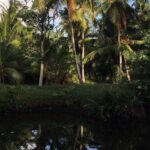
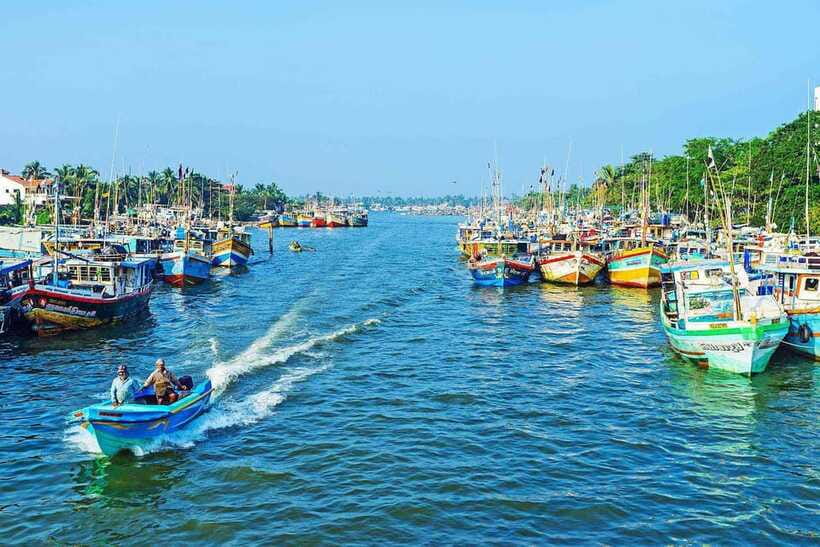
Along the lagoon edge, you’re surrounded by a very human shoreline: rice paddies, coconut plantations, and grassland show up close to the water. Land here is used for fishing and agriculture, so it doesn’t feel like a fenced-off nature park. You’re watching a wetland that people depend on.
What I like about this staging: the tour doesn’t just point at nature. It shows how nature and local livelihoods share the same space.
You can also read our reviews of more boat tours in Negombo
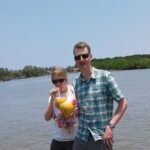
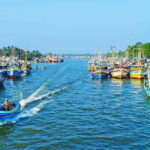
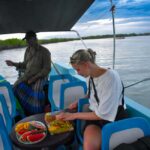
Negombo Lagoon cruising: mangroves, fishing villages, and birds on patrol
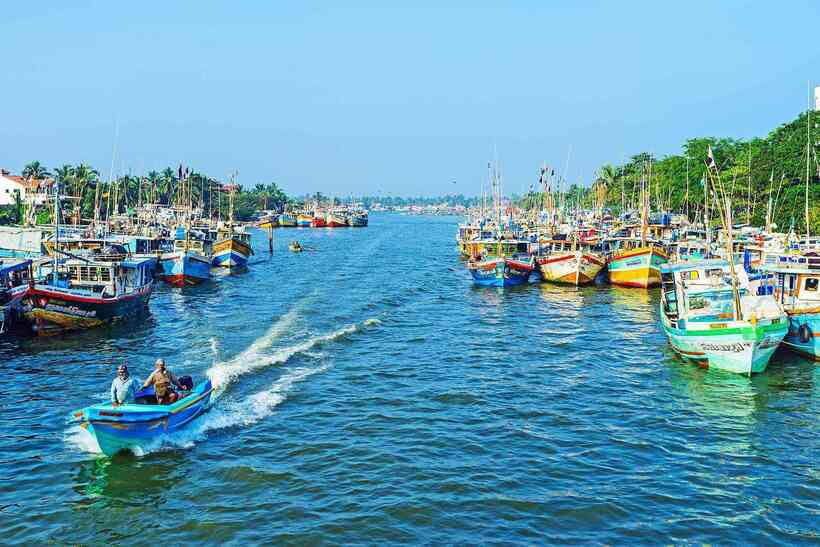
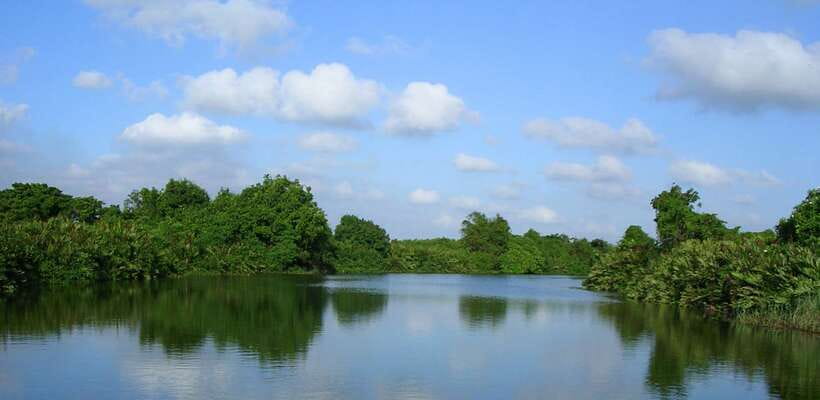
Once you’re in the lagoon zone, the vibe shifts from canal corridor to wetland theater. The lagoon has extensive mangrove swamps, and that’s where most of your time will feel visually busy—in a good way. Mangroves create feeding and hiding spots, and they act like a living shoreline.
Your cruise here is again around 45 minutes, with break time and guided sightseeing. You’ll likely be scanning for movement in the trees and along the waterline. The goal is birds, and the route is set up for it.
Based on the tour’s focus, you can reasonably expect sightings of:
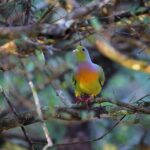
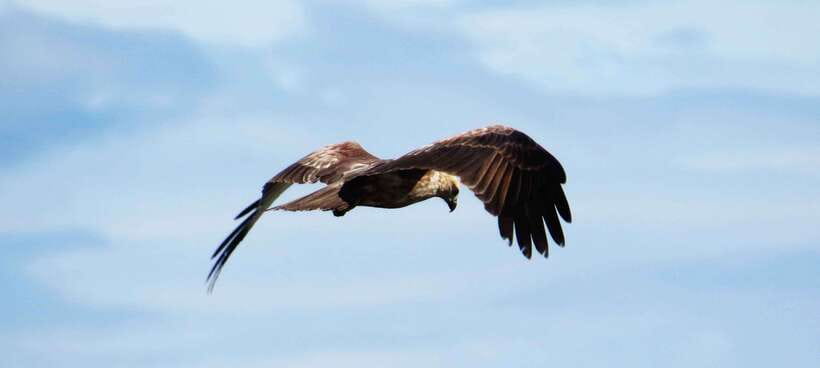
- Cormorants
- Herons
- Egrets
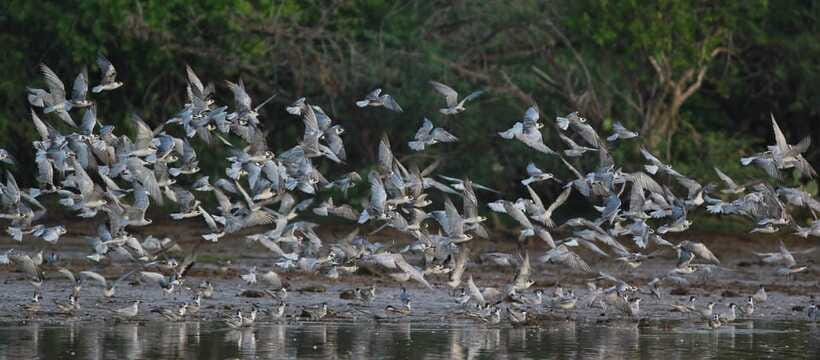
- Terns
- Gulls and other shorebirds
Because you’re on calm water, it’s easier to track birds than on a fast speedboat. The boat also makes short photo stops make sense. You’re not constantly stopping and starting, so you can actually watch before you aim the camera.
This is also a good moment to notice how the lagoon functions. Mangroves aren’t just scenery. They help protect shorelines, filter water, and provide habitat. When you see birds foraging around mangrove roots or hovering near the surface, you’re basically watching the ecosystem at work.
One practical tip: bring sunglasses and keep your eyes on the waterline and mangrove edges. In bright light, birds can be hard to spot until you catch movement against darker green.
Muthurajawela Wetland Sanctuary Visitor Center: where the story gets real
The last main stop is the Muthurajawela Wetland Sanctuary Visitor Center area. This is where you go from spotting to understanding—why this place matters for plants, animals, and migration.
You’ll spend about 1 hour here, with break time, a visit component, and guided explanation. Even if you’re not into museums, visitor centers in wetland sanctuaries are useful because they connect what you saw on the boat to what’s happening on land.
The Muthurajawela wetland is described as a home for diverse flora and fauna, including species that are endemic and threatened. It’s also an important stop for migratory birds, which explains why the area attracts so much seasonal activity.
That matters for your expectations. This isn’t just a one-time “look at birds” outing. It’s a living network where birds pass through, feed, and rest. If you’re the type who likes to understand why an ecosystem draws people (and animals), you’ll get more out of this portion than a simple viewing cruise.
My take on the visitor center time: it gives you a reason to care. The boat is visual; the center helps you connect the visuals to conservation and survival.
The itinerary flow: 2.5 hours that stays structured, not chaotic
The total duration is about 2.5 hours, and the plan is built in a stop-by-stop rhythm:
- Pickup from Negombo, Waikkal, or Katunayake
- Dutch Canal segment (about 45 minutes) with guided tour and photo break
- Negombo Lagoon segment (about 45 minutes) with guided sightseeing and photo break
- Muthurajawela Wetland Sanctuary Visitor Center (about 1 hour) with visit and guided tour
- Drop-off back at one of the same locations (Katunayake, Waikkal, or Negombo)
That structure is good if you want a nature outing without losing half a day. It’s also why the tour works well right after a hotel breakfast or before dinner plans.
That said, one consideration: if you’re expecting a long day, don’t. Some people have reported the experience feeling shorter than certain advertised durations. With a fixed cruise and visitor center timing, the tour is built to finish while you’re still fresh, not to stretch for hours on end.
Bird spotting like a pro: what to watch for from the boat
If your idea of a great day is watching animals instead of just taking in views, you’ll like this format. The boat ride is designed for slow scanning.
Here’s what to focus on as the boat moves:
- Look for still birds near mangrove roots. Mangroves offer cover and feeding zones.
- Watch for birds along the surface or near the edges of the water. Shorebirds and terns often show up when there’s food movement.
- Track cormorants and herons when they pause; their positions change slowly, which makes them easier to confirm.
- During guided explanation, listen for what your guide says about feeding behavior and habitat. It makes sightings feel more connected.
Also, don’t forget the simple stuff: comfortable footing matters. Bring comfortable shoes, since you’ll likely be walking briefly around stops and at the visitor center.
Price and value: what $80 buys you in Negombo
At $80 per person for 2.5 hours, you’re paying for more than a boat ride. You’re getting a setup that includes:
- Hotel pick-up and drop off
- Private boat with life jackets
- An English-speaking nature guide
- Light refreshments
That package is the value angle. If you tried to piece it together yourself, you might save money, but you’d be coordinating transport, boat timing, and guiding. For many visitors, paying for someone else to handle the logistics is the real win.
Still, it’s fair to think about who this is best for. If you’re traveling solo or as a couple and you want an efficient, guided wildlife outing with door-to-door convenience, this price can make sense. If you’re the type who enjoys hunting around for local options and negotiating, you may find cheaper ways to do parts of it.
My practical recommendation: treat this as a “guided nature hour with transport included,” not as a bargain. You’re paying to reduce friction and get a focused experience.
Who this boat tour suits (and who should skip it)
This is a great match if you want:
- A short, structured nature outing near Negombo
- Bird spotting without dealing with long drives
- An English nature guide to explain what you’re seeing
- Calm water and a private boat feel
It may be less suitable if you:
- Are pregnant
- Have back problems
- Have mobility impairments
- Need a very accessible route
Also, keep rules in mind: pets aren’t allowed, smoking isn’t allowed, and you shouldn’t bring luggage or large bags. If you’re traveling with kids, children must be accompanied by an adult.
Guide quality makes or breaks it: why the English commentary matters
The tour leans hard on guiding. The boat isn’t just movement—it’s interpretation. You’ll get English explanations tied to the canal, lagoon, and wetland sanctuary, and that turns a “pretty boat ride” into something you can talk about later.
One guide named Norman was specifically praised for being kind and enthusiastic and for sharing history and fun facts about Negombo and the wider country context. That kind of delivery matters because the scenery is visual, but the meaning comes from the story.
You’ll also see plenty of friendly, organized service around timing and transfers. When the guide and transport run smoothly, the experience feels calm, even though you’re moving through multiple stops.
Quick planning tips so the trip feels easy
Here’s how to make this tour work in real life:
- Wear comfortable shoes you don’t mind getting a bit dusty or damp.
- Bring sunglasses and a sun hat. The light can be strong.
- Keep your bag small. No large luggage is allowed.
- If you’re sensitive to boat movement, sit where you feel most stable and avoid rushing photos while the boat is moving.
- Plan this early enough in the day that you’re not rushing to a tight dinner reservation.
If you want the best bird chance, keep your eyes open during transitions too. You often spot birds when you’re focused on the edges, not when you’re staring straight ahead.
Should you book the Negombo boat via Muthurajawela?
I think you should book this if you want a compact wildlife-and-wetlands outing that’s organized, guided, and genuinely about animals. The combination of Dutch Canal cruising, mangrove lagoon habitat, and a wetland visitor center gives you both the look and the context.
Skip it if:
- You expect a long, all-day excursion
- You’re looking for a low-cost adventure only
- You have mobility or back concerns, since it’s not suitable for those situations
If you match the “short nature day with birds” goal, this trip is a solid use of time around Negombo.
FAQ
Where do they pick me up and drop me off?
Pickup is available from hotels in Negombo, Waikkal, and Katunayake. Drop-off is also at Katunayake, Waikkal, or Negombo.
How long is the boat trip?
The duration is listed as about 2.5 hours.
Is there an English-speaking guide?
Yes. The tour includes a live English nature guide.
What’s included in the price?
Hotel pick-up and drop off, a private boat with life jackets, an English-speaking nature guide, and light refreshments during the boat ride are included.
Is it a private group?
Yes. The experience is described as a private group.
What should I bring?
Bring comfortable shoes, sunglasses, and a sun hat.
Can children join?
Children must be accompanied by an adult.
Is it suitable for mobility impairments, pregnancy, or back problems?
No. The experience is listed as not suitable for pregnant women, people with back problems, and people with mobility impairments.
Is free cancellation available?
Yes. You can cancel up to 24 hours in advance for a full refund.