REVIEW · COLOMBO TEMPLE & HERITAGE TOURS
Negombo Heritage Walking Tour
Book on GetYourGuide →Operated by Real Lanka Holidays Pvt Ltd · Bookable on GetYourGuide
Negombo has a smell you’ll remember. This 3-hour heritage walk connects temple life, market hustle, and colonial-era landmarks, and a good English-Hindi guide helps you make sense of it all. I especially like how the tour focuses on real everyday stops instead of just photo points. The main thing to watch: the sun heats up fast, so you’ll want to go earlier rather than later.
You start at the Sri Mutthu Mari Amman Temple on Sea Street, then you follow the route toward the Indian Ocean along King George Drive—where the fishing story gets told in dry fish, boats, and working stalls. Later, you get the chance for classic pictures around Kothlawala Bridge and the calmer feel of St. Mary’s Cathedral.
In This Review
- Key Highlights You’ll Care About
- Starting at Sri Mutthu Mari Amman Temple on Sea Street
- Fruit, Vegetables, and the Daily Market Rhythm
- King George Drive: Where the Ocean and Dry Fish Connect
- Lellama Fish Market: A Working Place, Not a Show
- Passing the Prison Landmark and Reaching Dutch Fort Territory
- Kothlawala Bridge: Quick Photos and the Boats Perspective
- Negombo Lagoon and St. Mary’s Cathedral: A Softer Tone
- Negombo Rest House: A Famous Stop You Can See Without Overthinking
- Price and Value: Is $14 Worth It?
- Timing Tip: Go Morning for Comfort
- Who This Tour Suits Best
- Should You Book the Negombo Heritage Walking Tour?
- FAQ
- Where does the tour start?
- How long is the Negombo Heritage Walking Tour?
- How much does the tour cost?
- What sights are included?
- What language is the guide?
- Is refreshments or food included?
- What should I bring?
- Do I need to arrange my start time?
- What’s the cancellation policy?
Key Highlights You’ll Care About
- Sri Mutthu Mari Amman Temple as the cultural starting point on Sea Street
- Fruit and vegetable market stops that show daily trading rhythms
- King George Drive alongside the Indian Sea and the dry fish processing area
- Lellama fish market experience, including the sensory reality of fishing towns
- Old Dutch Fort area + St. Stephen’s Church for colonial-era context
- St. Mary’s Cathedral and lagoon scenery for a change of pace
Starting at Sri Mutthu Mari Amman Temple on Sea Street
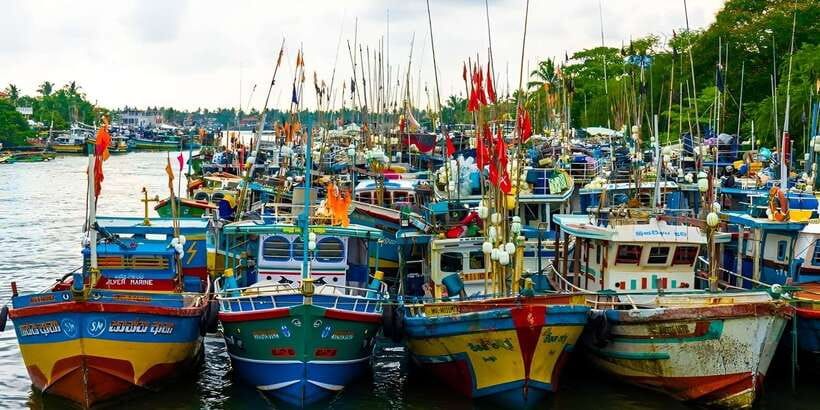
The tour begins at the Sri Mutthu Mari Amman Temple, right on Sea Street. This matters more than it sounds. Negombo is a multi-cultural city, and starting with a Hindu temple sets the tone for how layered the area feels—religion and daily life side by side.
You get a short guided introduction and a quick look around, just enough to get your bearings. From there, you move on foot, which keeps the pace friendly. You’re not riding past history behind a window. You’re walking through it.
Practical tip: choose sunglasses and sunscreen from the start. This is a coastal town, and the day can turn bright quickly.
You can also read our reviews of more walking tours in Negombo

Fruit, Vegetables, and the Daily Market Rhythm
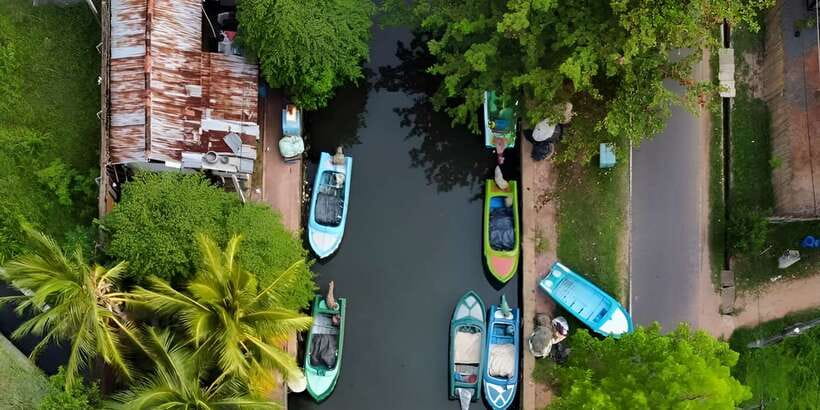
Next up is a local market with stalls selling vegetables and fruits. This is one of my favorite types of tour stops because it’s not staged. Markets like this are where you see how people actually buy and sell, what’s seasonal, and what everyday life looks like.
A good guide makes these stops click into place. Instead of you just watching vendors, you learn how food and trade connect to culture in a city where fishing and agriculture sit close together. You’ll also start noticing how spices, local flavors, and household cooking show up everywhere—especially once you get closer to the fish portion of the walk.
If you like photography, keep an eye on hands and close details: price tags, piles of fruit, and how vendors arrange goods for quick browsing.
King George Drive: Where the Ocean and Dry Fish Connect
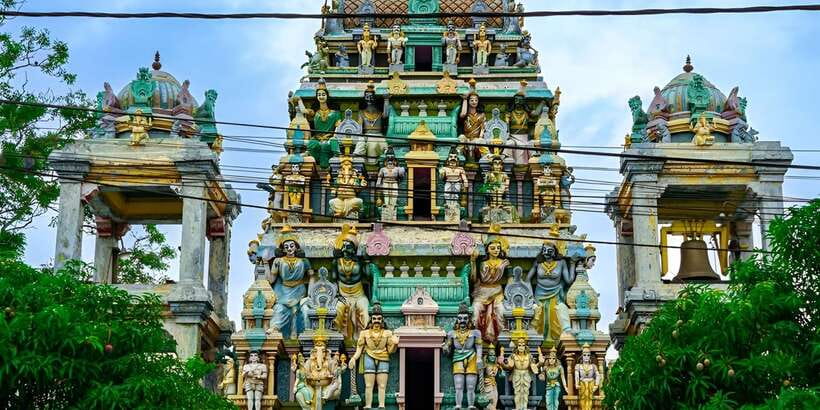
Then you head along King George Drive, named after King George’s visit to the city. The big reason this stretch is valuable is location. The road runs parallel to the Indian Sea, so you don’t just hear about fishing—you see it in the layout of the area.
As you walk, you reach the zone where angler activity and dry fish processing happen. The tour description calls out the dry fish smell, and that’s honest. This isn’t a museum corridor where you can hold your nose. It’s a working coastal economy, and smell is part of that reality.
A quick note on expectations: if strong odors make you uncomfortable, this part might be the hardest. But it’s also the part that makes the tour feel authentic. You’re learning how Negombo functions, not just how it looks.
Lellama Fish Market: A Working Place, Not a Show
After the dry fish area, the route takes you into the fish market (Lellama). This is where the story becomes sharper. A fish town has rhythms: sorting, buying, selling, and moving inventory fast before the day shifts again.
The guide’s job here is crucial. When you know what you’re looking at, the fish market stops feeling like chaos and starts feeling like a system. You’ll likely learn about how the market connects to the processing area and the broader fishing economy.
This is also the part where you may want your camera ready—but be mindful of people working. In real markets, it’s polite to shoot thoughtfully, not like you’re taking trophies.
Passing the Prison Landmark and Reaching Dutch Fort Territory
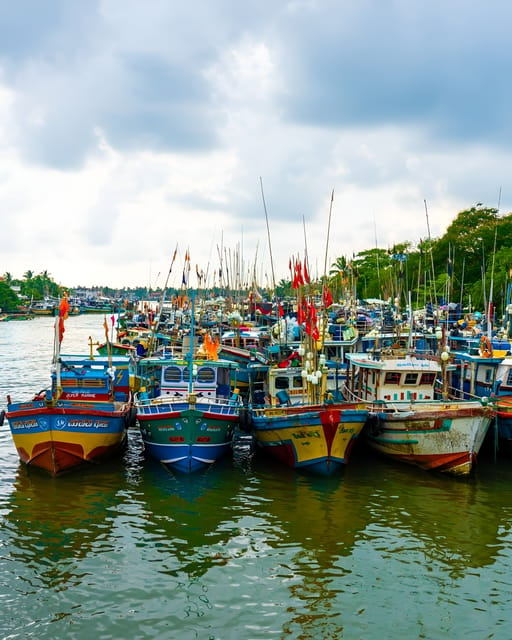
As you continue, you pass by a landmark near the prison area, then you move toward the Negombo Dutch Fort zone. Colonial-era sites in Sri Lanka often feel surprisingly practical once you’re there. They weren’t built just to impress—they were built to control land, trade, and movement.
The fort stop is also tied to the St. Stephen’s Church you’ll see nearby. That combination is useful for understanding how European influence mixed into existing local patterns. You get a sense of the city’s layers: local religious life on one side, colonial structures on the other, all in the same walk.
What I like about this portion is that it gives you historical context without turning into a lecture you can’t use. You can point at the structures and instantly connect them to what you’ve already seen in the market and coastal areas.
You can also read our reviews of more historical tours in Negombo
Kothlawala Bridge: Quick Photos and the Boats Perspective
Soon after the fort area, you pass by Kothlawala Bridge, and it’s one of those stops where you’re rewarded for just pausing. The bridge gives you a clean view for taking pictures—especially with fishing boats in sight.
Even if you don’t care much about photos, this is still a worthwhile moment. Bridges force you to shift viewpoint. In Negombo, that viewpoint shift matters because so much of the city’s life is about water routes, work corridors, and how people move between shoreline and market areas.
Take a few minutes here. Don’t rush it. It’s the type of break that makes the rest of the walk feel lighter.
Negombo Lagoon and St. Mary’s Cathedral: A Softer Tone
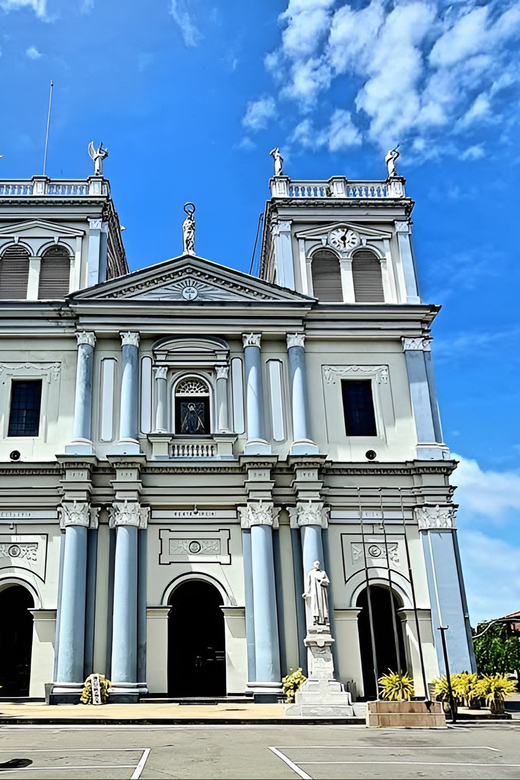
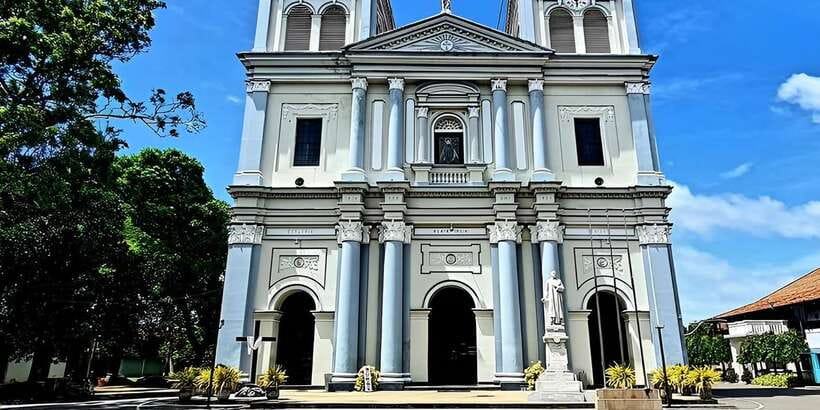
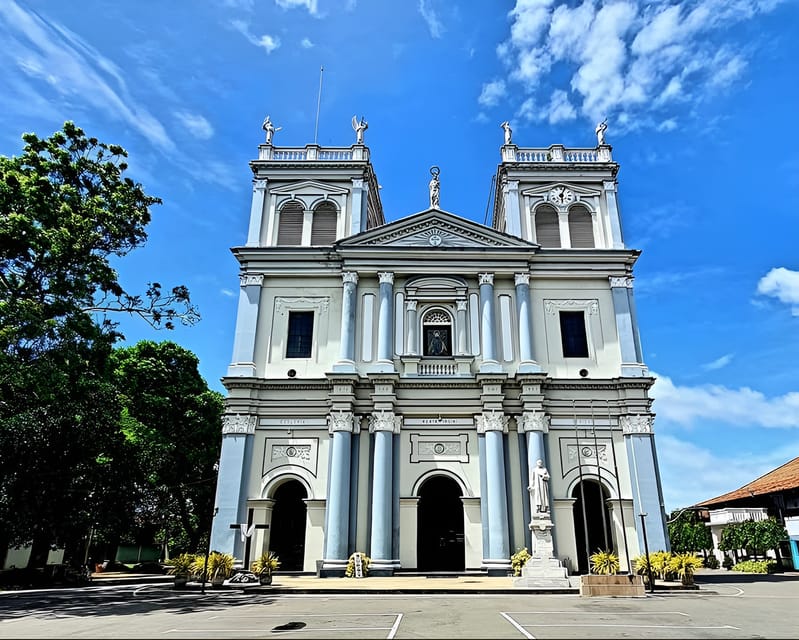
From there, the pace changes again. You’ll reach the Negombo Lagoon area, then continue toward St. Mary’s Church (often referenced as St. Mary’s Cathedral in tour descriptions).
The lagoon stop gives you a breather from the stronger coastal processing zones. Water changes the mood fast. You can look out and suddenly the city feels less like a job site and more like a place where daily life happens at a slower tempo.
Then comes the church stop. St. Mary’s brings a different religious layer to the walk after the earlier Hindu temple start. Seeing both in one route helps you understand Negombo as a place where different communities coexist, not as isolated “sights.”
This is also where the tour turns practical and food-focused again. The plan includes time for quick Sri Lankan spicy snacks or sweets, with refreshments provided, so you’re not spending the last stretch on empty energy.
Balanced expectation: snacks are listed as part of the included experience. Still, if you have a strong preference (like avoiding very spicy foods), I’d suggest asking the guide what they’re offering at the cathedral stop so you can choose comfortably.
Negombo Rest House: A Famous Stop You Can See Without Overthinking
One highlight in the tour concept is the Negombo Rest House. Even when you’re not sure what you’re looking at, it’s a useful landmark because it helps you anchor the walk geographically. Famous places like this act like reference points for the city’s layout and older administrative or traveler history.
If you like walking tours that help you orient yourself fast, a recognizable landmark like this is worth having in the route.
Price and Value: Is $14 Worth It?
At about $14 per person for roughly 3 hours, the value comes from focus, not fluff. You’re paying for:
- an English-speaking guide (with English and Hindi support mentioned),
- a route that combines temple, markets, fish economy, and colonial landmarks,
- and refreshments plus snack tasting.
In many destinations, $14 buys a generic walking stroll with minimal context. Here, the tour is structured around meaningful transitions: temple to market, market to fishing work, fishing work to colonial structures, then back toward water and church life.
That’s the key value: you leave with a mental map of how Negombo works, not just a list of places.
Timing Tip: Go Morning for Comfort
One practical lesson from the tour experience is about heat. Negombo can get very hot, especially later in the day. If you can, aim for a morning start and keep your pace easy.
The walk is timed in segments—there are shorter guided stops and short walking stretches—but it’s still outdoors for the better part of the three hours. Morning gives you better comfort and makes the fish-market portion easier to tolerate.
Who This Tour Suits Best
This tour fits best if you:
- want a fast way to understand Negombo’s mixed culture without renting a car,
- enjoy markets and everyday street life as much as landmarks,
- like learning how food and work shape a city (especially fishing and dry fish processing),
- prefer a guide-driven walk with context at each stop.
If you’re the type who needs quiet, air-conditioned breaks every few minutes, this one might feel a bit intense due to sun and the strong smell near processing areas. But if you’re curious and flexible, it’s a great way to see the city as it is.
Should You Book the Negombo Heritage Walking Tour?
I’d book it if you want an organized, guided way to understand Negombo’s identity—temples, church life, markets, fish work, and Dutch-era landmarks—within 3 hours. The price is reasonable for the time and the included guide plus refreshments.
Don’t book it expecting a neat, smell-free “tourist fish market.” This walk includes the real working coastline experience, including the dry fish processing zone. And if you’re sensitive to heat, plan your start time carefully and go earlier in the day.
If you’re ready for that honesty—and you want a guided map of how Negombo connects water, food, and faith—this is a smart choice.
FAQ
Where does the tour start?
The meeting point is in front of the Sri Mutthu Mari Amman Temple.
How long is the Negombo Heritage Walking Tour?
The duration is 3 hours.
How much does the tour cost?
It costs $14 per person.
What sights are included?
You’ll visit the Sri Mutthumari Amman Temple, local vegetable and fruits market, dry fish processing area and fish market (Lellama), the Dutch Fort area, St. Stephen’s Church, Negombo Lagoon, and St. Mary’s Church/Cathedral.
What language is the guide?
The tour offers a live guide in English and Hindi.
Is refreshments or food included?
Yes. Refreshments and a snack tasting menu are included.
What should I bring?
Bring sunglasses and sunscreen.
Do I need to arrange my start time?
Yes. You should get in touch after booking to arrange a convenient start time.
What’s the cancellation policy?
Free cancellation is available up to 24 hours in advance for a full refund.