REVIEW · WALKING TOURS
Colombo Social and Political Walk
Book on Viator →Operated by Planetwonk · Bookable on Viator
Politics feels different after street-level context. This Colombo Social and Political Walk turns big headlines into something you can see, starting at the Kingsbury and weaving interactive storytelling through key sites around town. I especially liked how the pacing feels like a documentary: clear, information-heavy, and built to help you form your own view of Sri Lanka’s past and present, including today’s crisis with shortages of food, fuel, and electricity.
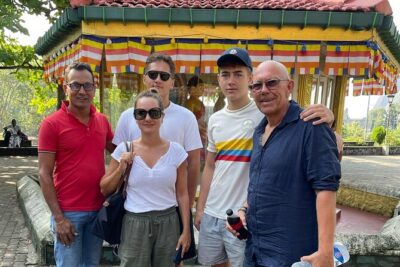
My second favorite part is the human layer—Chami. The tour’s strongest moments are when the guide threads social and political context together in a way that’s easy to follow, without talking down. One consideration: it runs in the open air and it requires good weather, so plan to check conditions and have a flexible mindset.
In This Review
- Key things I’d watch for on this walk
- Colombo’s Social and Political Walk: what you’re really signing up for
- Starting point at the Kingsbury, ending at BMICH: timing and pacing
- Colombo Port City and Pettah market: trade meets everyday life
- Good market and Tea Avenue: seeing brands and basics in the same frame
- World Trade Center and Old Parliament: where economics and authority talk
- Independence Square and BMICH: the civic stage and the meeting hall
- How the walk stays balanced during Sri Lanka’s current crisis
- Price and value: $35.99 for 2.5 hours of politics in motion
- When this tour is a great fit (and when to skip it)
- Should you book the Colombo Social and Political Walk?
- FAQ
- How long is the Colombo Social and Political Walk?
- What time does it start, and where?
- Where does it end?
- How much does it cost?
- How big is the group?
- What if the weather is bad?
Key things I’d watch for on this walk
- Documentary-style, interactive flow that connects sites to the story of the modern state and today’s reality
- Chami’s clear political and economic framing, good for anyone who wants Sri Lanka “101”
- A route designed around contrast: port-linked commerce, street markets, civic/political landmarks
- Small-group pace with a maximum of 25 people, which helps the talk-and-walk rhythm
- Weather matters, since the experience depends on good conditions to run as scheduled
Colombo’s Social and Political Walk: what you’re really signing up for
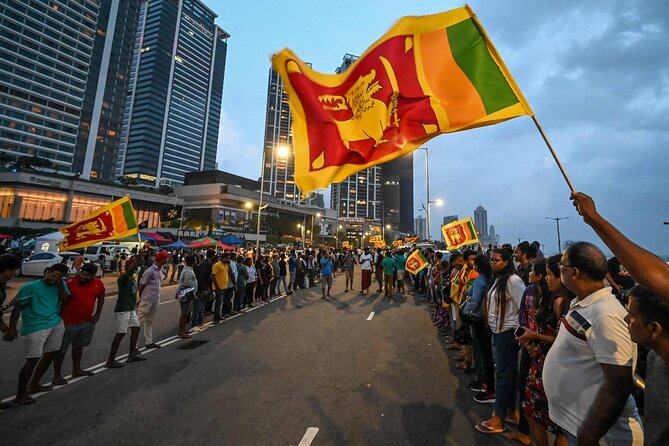
This isn’t a “look at this building” sightseeing loop. You’re taking a walk that treats Colombo like a living classroom. The idea is simple: politics and economics aren’t just speeches and spreadsheets. They show up in where people trade, where power is discussed, and how daily life gets hit when supplies get scarce.
The tour is designed to have the feel of a documentary. Expect a steady stream of context—enough to be interesting even if you don’t know much about Sri Lanka’s recent history. It’s also built to be balanced and non-biased, with a goal that you come away thinking for yourself, not adopting someone else’s talking points.
And yes, you’ll still see real Colombo. But you’ll be seeing it with questions in mind, like: Why did the modern state take the shape it did? How do social systems affect everyday choices? What does the current crisis change on the ground?
You can also read our reviews of more walking tours in Colombo
Starting point at the Kingsbury, ending at BMICH: timing and pacing
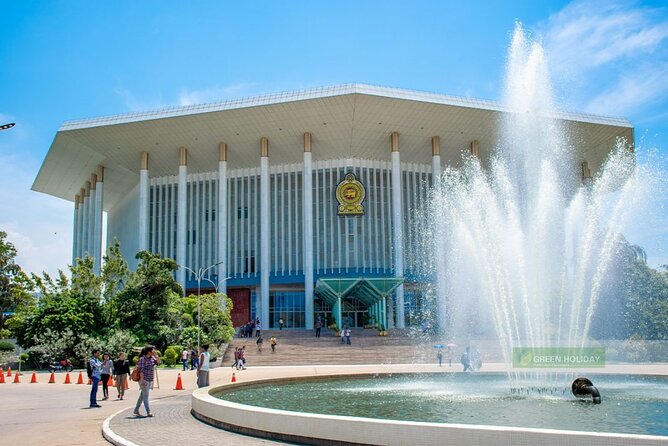
The tour starts at 5:00 pm at the Kingsbury Colombo (48 Janadhipathi Mawatha). It ends at BMICH (Bandaranaike Memorial International Conference Hall) on Bauddhaloka Mawatha.
That late-afternoon start is part of the practical design. In Colombo, the light and street energy shift quickly in the evening hours, and the walk format makes it easier to keep moving than to stop for long stretches. The total duration is about 2 hours 30 minutes, so it’s long enough to build a narrative arc, but short enough that you’re not stuck “thinking about politics” all day.
You’ll also want to know the group size is capped at 25 travelers. That matters more than it sounds. Smaller groups usually mean fewer bottlenecks at busy spots and a smoother chat-based rhythm with the guide.
Finally, you’ll get a mobile ticket. So have your phone ready, and plan to keep it charged—easy, but Colombo can surprise you with how much you’ll use it for maps.
Colombo Port City and Pettah market: trade meets everyday life
The route opens with Colombo Port City, then moves into neighborhood-scale life at the Pettah market.
Port City is a good first stop because it signals something bigger than a single street. Even if you don’t go into deep technical details on your own, you’ll feel the “global meets local” vibe—this is the kind of place tied to wider economic currents. The tour uses it as a starting point for talking about how systems of trade and governance shape what’s possible for people in the city.
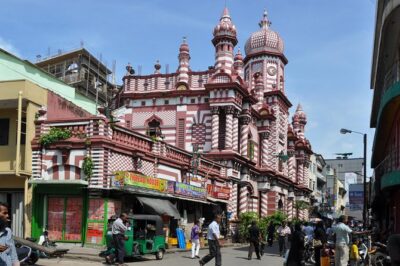
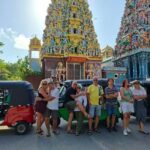
Then the walk shifts gears into Pettah. Markets like this are where you see the city’s economy in motion. If the political story is about structure—institutions, decisions, power—Pettah is where you see the output of those systems. You’re not just watching commerce; you’re watching how people adapt to prices, availability, and the daily rhythm of supply.
A practical note: markets are active. Expect noise, crowds, and quick turns of the sidewalk map. If you want photos, plan for a few quick shots rather than long pauses. This walk works best when you keep the pace and let the guide point out what connects the sites.
Good market and Tea Avenue: seeing brands and basics in the same frame
After Pettah, the tour heads to Good market, then continues to Tea Avenue – Dilmah Building.
Good market fits the same role as Pettah: it’s another window into day-to-day buying and selling. The key is how the tour uses market environments to talk about economics in real terms. Prices, access, and everyday needs become more than abstract concepts. They’re visible in how people shop and what the city moves through.
Then you hit Tea Avenue and the Dilmah Building. This stop is a shift from pure market atmosphere to a more “corporate and brand” expression of commerce. The tour uses it to connect business identity and national economic themes. It’s an interesting contrast: one place feels like immediate daily needs, and the other feels like a designed, named presence in the business world.
If you’re the kind of traveler who likes connecting dots—why a city looks the way it does, and how private enterprise intersects with national stories—this middle stretch is where the walk starts to click.
World Trade Center and Old Parliament: where economics and authority talk
The next two stops, World Trade Center and Old Parliament, are where the walk leans most directly into power.
The World Trade Center is useful because it naturally invites discussion about trade, economic direction, and how a country positions itself. Even without getting too technical, you’ll understand why the tour pairs it with politics later. Economic policy and political decisions don’t sit in separate boxes—they influence each other constantly.
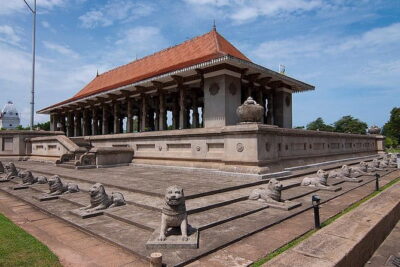
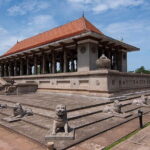
Old Parliament brings the story back to governance. This is where you can expect the tour to link institutions and political development to the city’s physical landmarks. The goal isn’t to turn you into a constitutional historian. It’s to give you enough context so you can recognize how decisions made at official levels spill into life at street level.
One benefit of pairing these sites back-to-back is that it reduces confusion. It’s easier to understand economics when you also understand who controls the rules of the game. And it’s easier to understand political history when you can see why institutions matter to daily economic realities.


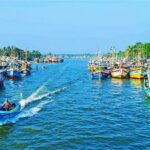
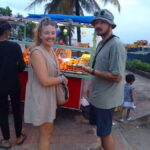
Independence Square and BMICH: the civic stage and the meeting hall
The walk closes with Independence Square and BMICH.
Independence Square is a place that naturally anchors “national story” questions. It’s ideal for thinking about how countries define themselves and how public identity gets tied to political change. The tour uses it to help you understand the arc from Sri Lanka’s modern state beginnings to today’s situation—without forcing a single conclusion on you.
Then you finish at BMICH, a conference and events venue. Ending here makes sense because the tour’s themes are discussion-heavy. Even if you don’t attend an event on the day of your walk, BMICH works as a symbolic finish: it’s a reminder that politics isn’t only about what happened. It’s also about what people argue for and plan next.
If you like closure to your itineraries, this ending does it well. You start with commerce, move through markets and institutions, then finish at civic and meeting spaces where decisions get carried forward.
How the walk stays balanced during Sri Lanka’s current crisis
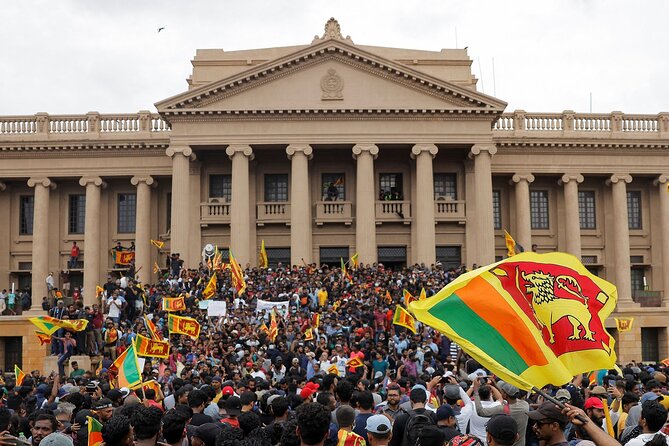
Sri Lanka is going through a severe crisis right now, and the tour doesn’t ignore it. The overview specifically points to shortages of essentials like food, fuel, and electricity, with knock-on disruptions for businesses and healthcare services.
What I like about this approach is that it doesn’t treat the crisis as a separate topic tacked onto history. It’s framed as part of the same social and political thread. That matters because it’s easy to get lost when you only hear about the crisis without understanding the longer context behind it.
At the same time, the tour is designed as balanced and non-biased. The guiding idea is that you should leave able to decide your own views after doing some first-hand research. That’s a good fit for travelers who don’t want a lecture. You want context, then you want to think.
Practical tip for you: come with a couple of questions you genuinely care about—economic impacts, political history, social change—and let the walk steer you to answers. The documentary-style pacing works best when you’re listening actively rather than scanning for a photo stop.
Price and value: $35.99 for 2.5 hours of politics in motion
At $35.99 per person, this isn’t the cheapest thing you can do in Colombo. But the value is in what you’re getting for the money: a focused, guided explanation tied directly to real locations.
You’re paying for three things:
- Time with an informed guide (the tour’s feedback emphasizes strong knowledge and clarity, with Chami highlighted by name)
- A structured route that connects sites to social and political ideas instead of leaving you to guess
- A small-group format (max 25), which usually makes the talk-and-walk experience easier to follow
Duration also matters. At about 2 hours 30 minutes, you’re buying a condensed “Sri Lanka politics and economics” experience without committing half a day. For many travelers, that’s exactly the sweet spot.
If you like planning ahead, note that it’s commonly booked around 19 days in advance. That’s not an emergency, but it’s a sign you shouldn’t wait until the last minute if your dates are fixed.
When this tour is a great fit (and when to skip it)
You’ll probably love this walk if you:
- Want to understand Sri Lanka beyond headlines
- Like history and politics, but want it explained in plain language
- Enjoy city walks where each stop has a purpose
- Appreciate a guide who can link social life and economic reality
You might hesitate if you:
- Prefer pure sightseeing over talk-heavy context
- Don’t enjoy walking through busy market areas
- Are sensitive to weather changes, since good weather is required
It’s also ideal if you want a starter framework before you do your own follow-up reading and observation later in Colombo. The tour is built to help you form questions, not just collect facts.
Should you book the Colombo Social and Political Walk?
I think it’s worth booking if you want your Colombo trip to include real context—not in a boring lecture way, but through a guided route that makes the social and political story tangible. The combination of documentary-style pacing, a clearly informed guide (Chami), and a sequence of meaningful stops—from Port City to Pettah, from markets to Old Parliament, and finishing at BMICH—gives you a structured way to understand what’s going on.
If you’re on the fence, decide based on this: do you want your time in Colombo to be more than photos? If yes, book it. If you want a relaxed evening with minimal discussion and lots of wandering on your own, you may prefer a lighter walk.
FAQ
How long is the Colombo Social and Political Walk?
It lasts about 2 hours 30 minutes.
What time does it start, and where?
It starts at 5:00 pm at the Kingsbury Colombo, 48 Janadhipathi Mawatha, Colombo, Sri Lanka.
Where does it end?
It ends at BMICH (Bandaranaike Memorial International Conference Hall), Bauddhaloka Mawatha, Colombo 00700, Sri Lanka.
How much does it cost?
The price is $35.99 per person.
How big is the group?
The tour has a maximum of 25 travelers.
What if the weather is bad?
The experience requires good weather. If it’s canceled due to poor weather, you’ll be offered a different date or a full refund.