REVIEW · COLOMBO TUK-TUK CITY TOURS
Tuk Tuk safari capital Colombo (Food and Entry Fees) Including
Book on Viator →Operated by Glory Tour By Tuk Tuk · Bookable on Viator
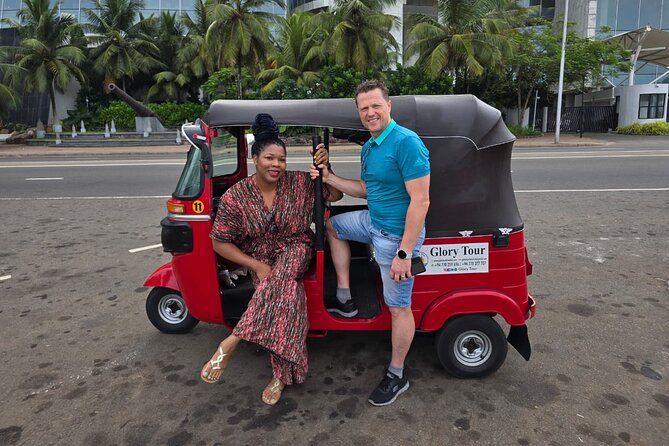
Tuk-tuk miles, big Colombo hits. This private 3.5-hour city tour strings together port history, colonial landmarks, faith sites, and photo-worthy skyline moments in a route you can actually finish without burning your whole day. You’ll move by tuk tuk, stop often, and get a guide who keeps things smooth and fun.
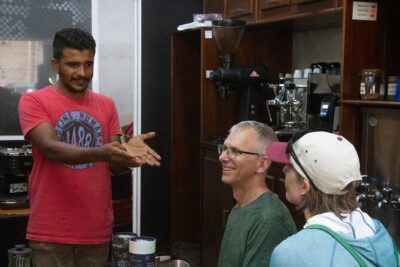
Two things I especially like: the guides named Sterlin or Selin are repeatedly praised for being friendly, professional, safe for solo travelers, and helpful with photos. I also like that several major stops have admission fees handled for you, including places tied to Colombo’s museum, temples, and tea tasting—so you’re not constantly budgeting time and money on the spot.
One consideration: the schedule is built from short visits, so if you want long, slow time inside any single place, you may wish there were more hours. And lunch is not included, so plan for that gap.
In This Review
- Key things to know before you go
- Colombo by Tuk-Tuk: a smart way to get your bearings fast
- Price and what you really get for $30
- How the 3.5-hour route stays manageable
- Port-side start: Maritime Museum and the Old Lighthouse
- Clock Tower to Pettah: colonial-era landmarks and real market life
- Church, Red Mosque, and Hindu temple on the same day
- Lotus Tower and Viharamahadevi Park: skyline and a needed breather
- Town Hall quick stop and why it matters
- Gangaramaya Temple: the longest spiritual stop you’ll make
- Gem mine and the tea shop: how to shop without getting pressured
- Independence Square to Galle Face Green: finish with sea air
- Included extras that make the day easier in real life
- Who this Colombo tuk-tuk tour is best for
- Should you book this tuk-tuk city tour?
- FAQ
- How long is the Colombo tuk-tuk safari tour?
- What is the price per person?
- Is pickup offered?
- Is the tour private or shared?
- What admission or entry fees are included?
- Are bottled water and other refreshments included?
- Is lunch included?
- What is included for comfort during the day?
- Is there free cancellation?
Key things to know before you go
- Private tuk-tuk ride with pickup means you start clean and easy, with only your group in control of the pace.
- Multiple admissions included cover key stops like the Maritime Museum, Gangaramaya Temple, Lotus Tower, and a tea tasting experience.
- Wi‑Fi hotspot + bottled water + king coconut are practical touches for a hot, busy city day.
- Umbrella included is a small thing that matters when tropical weather changes fast.
- A route that mixes faith and everyday life: Red Mosque, Catholic church, Buddhist temple, plus Pettah Market.
Colombo by Tuk-Tuk: a smart way to get your bearings fast
Colombo can feel big and patchy, depending on where you land and where you’re headed next. This tour helps you get your bearings fast by linking landmark clusters: harbor heritage early on, major squares and civic buildings mid-route, then temples and city viewpoints before you end by the sea.
What makes the format work is the balance between “look” stops and “stay a bit longer” stops. You’ll get quick orientation at places like the clock tower and town hall, then you’ll slow down more at heavier hitters like Gangaramaya Temple, where the longer stop actually lets you notice details rather than just snap a picture and move on.
You can also read our reviews of more food & drink experiences in Colombo
Price and what you really get for $30
At $30 per person for about 3 hours 30 minutes, the value comes less from one single attraction and more from the bundle. You’re paying for:
- private transportation (with fuel surcharge included)
- bottled water, a king coconut, and an umbrella
- Wi‑Fi hotspot for your phone and maps
- multiple admission fees covered for specific stops
- a mobile ticket setup for the day
Individually, tickets and a private driver/tuk-tuk can add up quickly. Here, your money turns into time savings and fewer friction points, especially if you’re short on days. If you’re the type who wants the “greatest hits” without doing the math on every ticket, this pricing structure tends to feel fair.
How the 3.5-hour route stays manageable
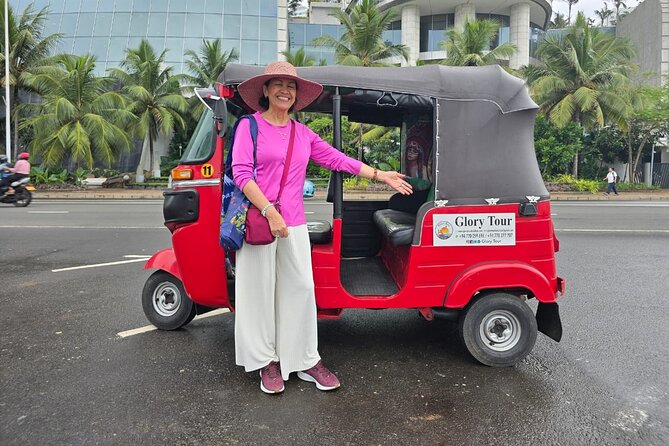
The timing is built around many short stops. Some are about 5 to 10 minutes, while a few run longer (notably the temples, tea, and the gem stop). That doesn’t mean the tour is rushed—it means your guide is trying to keep the day moving through different neighborhoods without losing you to traffic or long lines.
You’ll also feel the practical benefits of a private setup. Instead of waiting on strangers, your guide can shift the rhythm based on your group and what you want to photograph. The reviews highlight that guides stay adaptable to group needs and don’t treat the visit like a checklist.
Port-side start: Maritime Museum and the Old Lighthouse
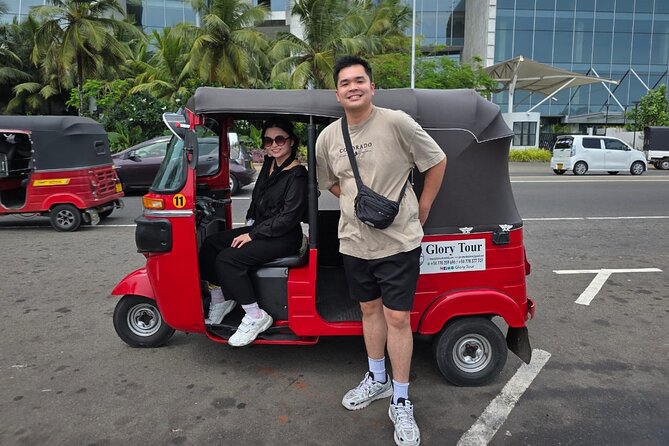
You kick off with the Colombo Port Maritime Museum. This is one of those places where the city’s identity becomes clearer fast. Expect exhibits tied to seafaring and maritime culture, stretching across centuries—from navigation tools to vessels. Even if you’re not a big museum person, this stop gives context for why Colombo matters historically as a port city.
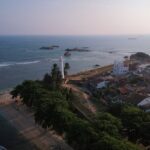
Next comes the Colombo Old Lighthouse near the harbor. The lighthouse story is the kind that turns a street corner into a timeline: it was originally a simple wooden structure, then replaced later by the stone tower you see today. It’s also built to impress with historical framing—founded in 1860, so it carries colonial-era maritime identity in a very literal way.
Good for: first-timers who want context early.
Possible drawback: these are shorter visits, so come ready to skim and absorb rather than expect a slow, deep museum day.
Clock Tower to Pettah: colonial-era landmarks and real market life
From maritime history you pivot to city landmark geometry with the Colombo Fort Clock Tower. It was built in 1857 to commemorate Queen Victoria’s reign. This is a quick stop, but it’s the kind of detail that helps you read Colombo’s colonial-era imprint when you’re walking later on your own.
Then you hit Pettah Market. This is where Colombo becomes loud and immediate. Pettah is busy, crowded, and sensory-heavy—expect sights, sounds, and smells as you pass through stalls tied to produce, spices, textiles, and more. It’s also a good place for people-watching because the market is not a museum; it’s part of daily life.
My practical advice here: treat Pettah like a place to explore with calm attention. Keep an eye on your belongings, move with the crowd, and decide in advance whether you’re browsing, shopping, or just photographing.
You can also read our reviews of more tours and experiences in Colombo

Church, Red Mosque, and Hindu temple on the same day
One of the smartest things about this tour is that it doesn’t force you to choose only one side of Colombo’s identity. You visit faith sites from different communities, and you do it in a way that feels like one continuous story of the city.
You’ll stop at St. Anthony’s Church in the Kochchikade area, tied to 19th-century Catholic architecture. It’s worth a look if you like seeing how different colonial influences translated into local religious spaces.
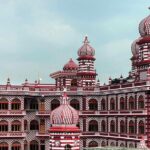
Then comes the Jami Ul-Alfar Mosque—often called the Red Mosque—built in 1909 with a red-and-white striped facade that makes it easy to spot even when streets get busy. The architecture is the headline here, and the short stop works well because the exterior presence does a lot of the talking.
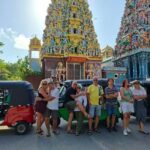
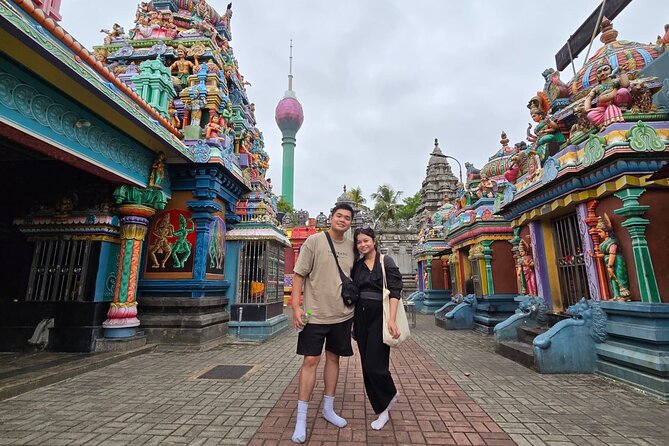
Later, you also visit a Hindu temple: Temple of Sri Kailawasanathan Swami Devasthanam Kovil. The point isn’t only the building; it’s the rhythm of religious space in the middle of the city. Since you’ll also be stopping at a major Buddhist site later, this creates a nice contrast across traditions without turning the day into something too academic.
Lotus Tower and Viharamahadevi Park: skyline and a needed breather
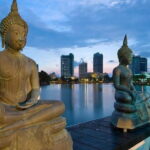
After a cluster of religious landmarks, you get a change of pace with the Lotus Tower. At about 350 meters, it’s Sri Lanka’s tallest structure and it functions as a telecommunications and observation tower. Even though your time there is brief, the stop is valuable because it adds a modern city silhouette to the older colonial and religious scenes you’ve already seen.
Then you head to Viharamahadevi Park, named after Queen Viharamahadevi. It’s a beloved public green space in the city center near the National Museum area. This is one of your “breathe for a minute” moments. You’ll get a bit of calm contrast after streets and crowds, and it helps you reset before the heavier temple visit.
Town Hall quick stop and why it matters
The Town Hall stop is short, but it’s a helpful visual marker. Colombo’s New Town Hall was built in 1952, and it houses the Colombo Municipal Council. The architecture is described as inspired by traditional Sri Lankan styles, which means you’re not just looking at colonial-era leftovers—you’re also seeing how national identity shows up in civic buildings.
If you like architecture, even a brief pass helps. If not, think of this as a waypoint that places you near the civic heart of Colombo.
Gangaramaya Temple: the longest spiritual stop you’ll make
The heart of the spiritual portion is Gangaramaya (Vihara) Buddhist Temple, with a longer visit time. This is one of Colombo’s most important Buddhist temples, and the description highlights a blend of modern elements with traditional Sri Lankan design. It’s also known for impressive sculptural features.
This stop is longer than the others for a reason: you’ll want a bit of time to look closely, especially if you care about how religious art sits in living city space. Since the rest of the day is built from short segments, this is the moment that gives you actual breathing room.
My tip: when you get to Gangaramaya, slow down your phone-clicking for a few minutes. Look first, then photograph. The temple rewards that kind of attention.
Gem mine and the tea shop: how to shop without getting pressured
Two of the included experiences are tied to Colombo’s famous specialties: gemstones and tea.
First, a Traditional Gem Mine stop. The idea isn’t only to show you shiny stones. It’s meant to give you a glimpse into how gem mining and processing worked traditionally, through the lens of what you can learn in a short visit. It’s also a reminder that Colombo’s trade heritage isn’t only maritime—it’s also about what the island produces and sells.
Next comes Ceylon Tea Supermarket, with a tea tasting component. Sri Lanka’s tea reputation is real, and this stop is a fun way to translate it from brand labels into actual blending and flavors. You’re also likely to see a wide range of Ceylon teas, which makes this a practical souvenir stop.
How to shop smart here:
- taste first, then compare
- don’t commit immediately if you’re planning to buy gifts
- treat it like a learning stop, not a one-stop shopping win
Independence Square to Galle Face Green: finish with sea air
You end with two iconic public spaces that work as a natural landing after all the temples and shop stops.
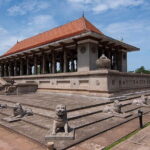
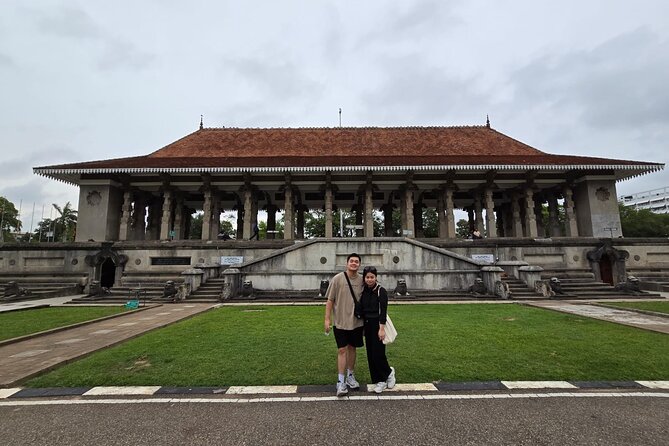
At Independence Square, the focus is the national monument tied to Sri Lanka’s freedom from British colonial rule in 1948. It’s the kind of stop that gives emotional context even if you don’t read every plaque. It also helps you feel how the city sees itself today.
Then it’s Galle Face Green, the oceanfront park stretching along the coastline. It started as a racecourse during the British colonial era and now serves as a public space where locals and visitors gather near the sea. This is a great ending because it’s visually calming and gives you a chance to decompress, take photos, and watch the city breathe.
Included extras that make the day easier in real life
This is one of those tours where the small inclusions matter more than you’d think on a warm day.
- Bottled water keeps you comfortable during short but frequent stops.
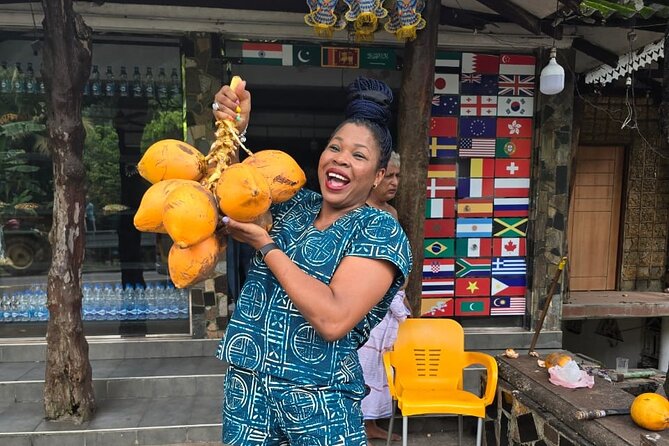
- King coconut is a nice local treat and a quick energy reset.
- Umbrella is worth its weight in peace if you hit sudden rain.
- Wi‑Fi hotspot helps you handle maps, translation, and sharing photos without burning your data.
- Mobile tickets reduce the stress of managing paper receipts.
If you travel light and don’t want to plan every comfort item, these details are genuinely useful.
Who this Colombo tuk-tuk tour is best for
This tour fits best if you:
- want a first-time overview of Colombo without doing a DIY route
- like mixing neighborhoods: port heritage, markets, faith sites, and civic landmarks
- care about a private experience and don’t want to share your day with strangers
- are traveling solo and appreciate guides who keep you feeling safe and comfortable (the reviews specifically highlight this)
- want a guide who helps with photos as well as sightseeing
If you’re a deep-detail museum person or you hate short stops, you might prefer a longer, slower day tour. But for most travelers, this route is a strong way to cover a lot while still feeling organized.
Should you book this tuk-tuk city tour?
I’d book it if you want a practical Colombo sampler that’s private, time-efficient, and includes entry fees and everyday comfort items. The best reason to choose it is simple: you get guided structure across a city that can otherwise feel hard to connect into one day.
I would hesitate if lunch is a deal-breaker for you, because you’ll need to handle meals on your own. I’d also set your expectations that some sites are quick photo-and-look stops, not long stays.
If you want, tell me your travel dates and where you’re staying in Colombo (rough area is fine). I can suggest how to pair this with an evening plan, so you don’t lose the rest of your day to logistics.
FAQ
How long is the Colombo tuk-tuk safari tour?
The tour lasts about 3 hours 30 minutes.
What is the price per person?
It costs $30.00 per person.
Is pickup offered?
Yes, pickup is offered.
Is the tour private or shared?
It is private, meaning only your group participates.
What admission or entry fees are included?
Included admission covers the Maritime Museum and Viharamahadevi Park, entry for the Independence Memorial Hall, entry for Gangaramaya Temple, and admission fee for the Ceylon tea tasting, plus admission related to other listed included stops like Lotus Tower and a Hindu temple.
Are bottled water and other refreshments included?
Yes. Bottled water and a king coconut are included.
Is lunch included?
No, lunch is not included.
What is included for comfort during the day?
Included items include private transportation, fuel surcharge, an umbrella, and a Wi‑Fi hotspot.
Is there free cancellation?
Yes. You can cancel up to 24 hours in advance for a full refund.